The Project
This client was constructing a commercial-style building on this lot. A few months earlier, we had cleared the lot of white oak trees and hauled off the vegetation, stumps and debris.
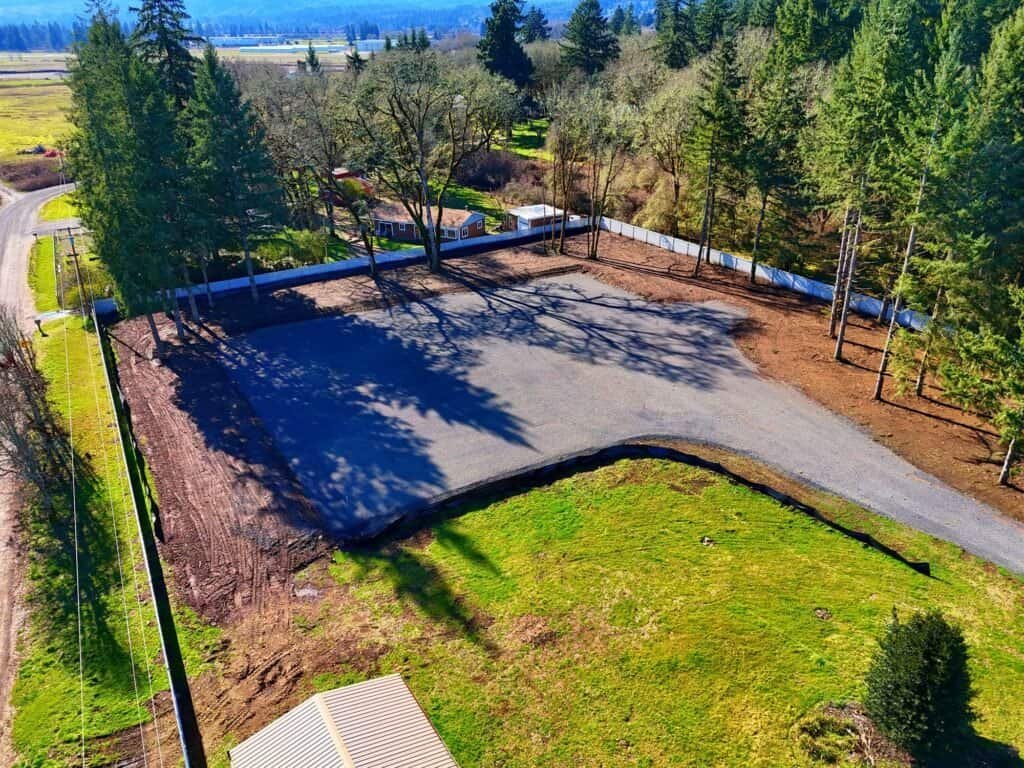
The next phase was a complete building pad, ready for construction.

Digging Down to a Solid Subbase
Because the building area had previously been forest, the topsoil was extremely deep. We removed 3 to 4 feet of topsoil and vegetation to reach a solid subbase.
All of the excavated material remained on site and was graded out across the rest of the property.
The subbase turned out to be hard round rock, so heavy-duty base rock was not required.
Building Up in Lifts
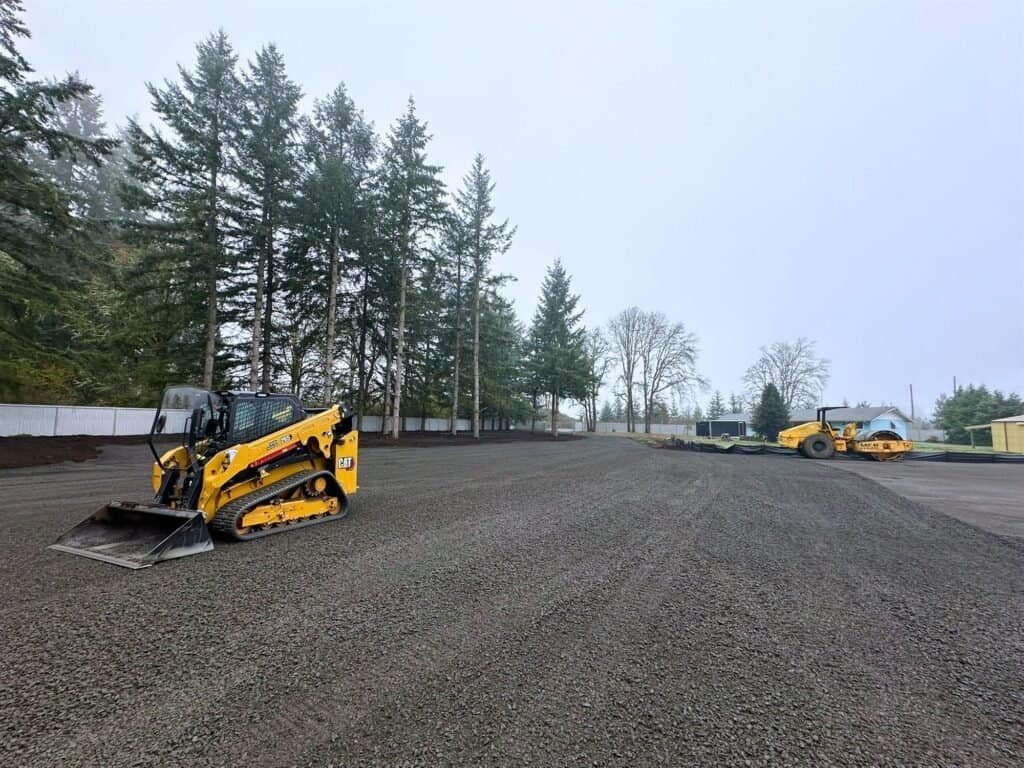
The project required compaction testing, and we used 3/4" minus for the entire build. The pad was built up in lifts, with each layer compacted before the next was placed. Some areas of the pad contain more than 4 feet of 3/4" minus.

Geotextile Fabric Under the Driveway
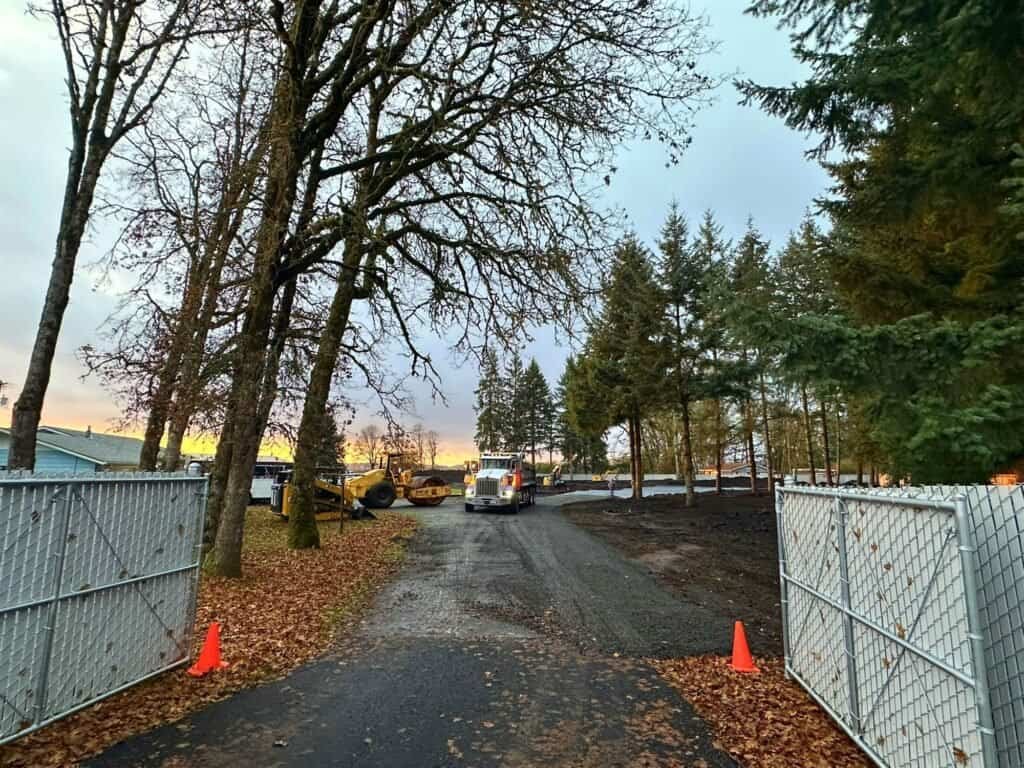
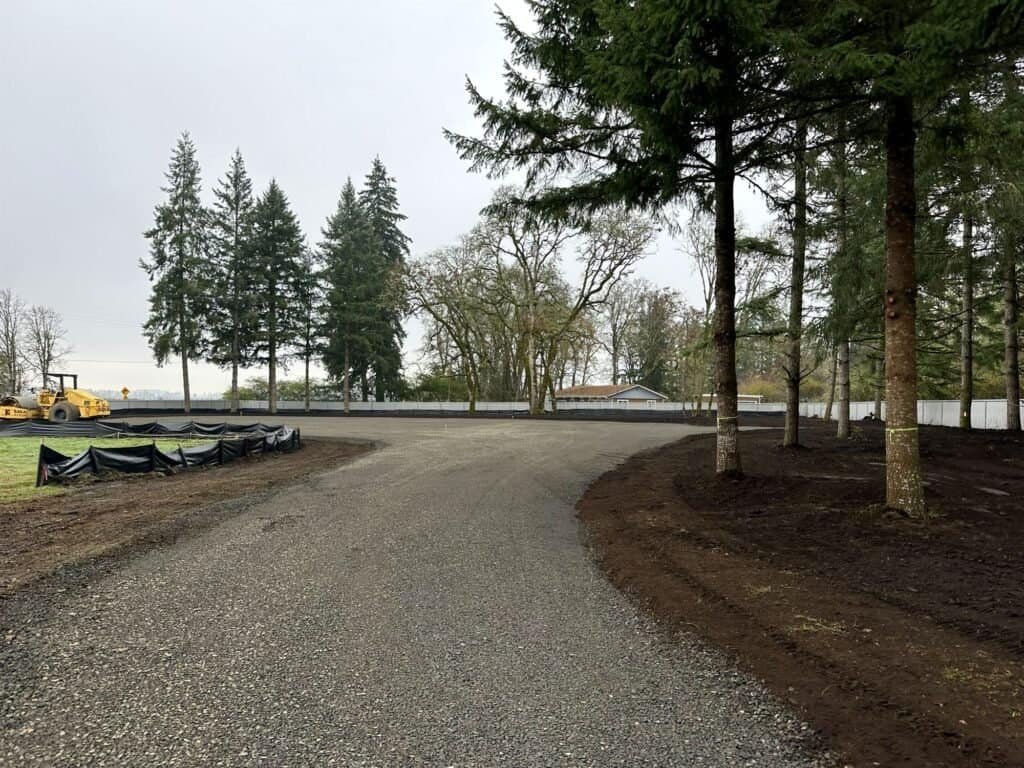
We installed geotextile fabric under the driveway and the areas to be paved with asphalt later, keeping the rock separated from the soil below.
More Than 200 Truckloads in Under a Week
More than 200 truckloads of rock were delivered, and the entire project was completed in under a week.

The Result
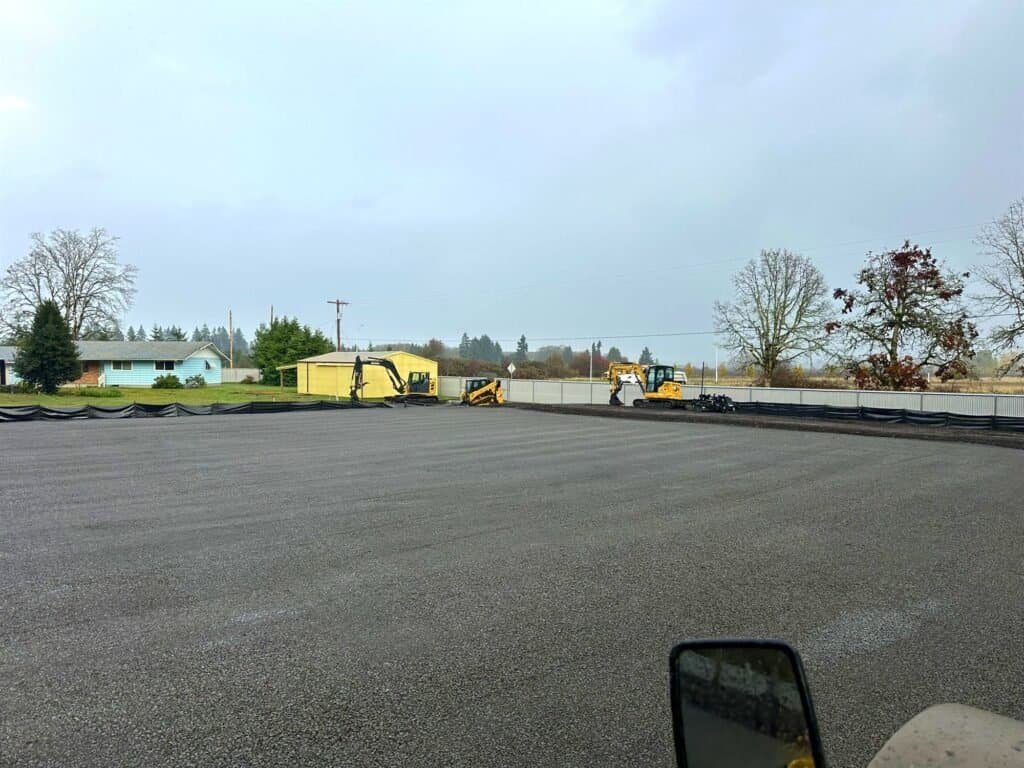
Every compaction test passed, the owner was very pleased, and the site is now ready for construction.

Materials Used
3/4" minus for the entire pad, placed and compacted in lifts (over 4 feet deep in places) on a natural round-rock subbase, with geotextile fabric under the driveway and future asphalt areas.
What a Project Like This Costs
Typical range
$50,000+
Commercial building pads like this one, with deep excavation, hundreds of loads of rock and compaction testing, usually run $50,000 or more.
What affects the cost
Every property is different, so the cost of similar projects can vary. The main factors are:
- Depth to a solid subbase. The deeper the topsoil, the more excavation and the more rock it takes to build back up.
- Amount of rock. Large pads and deep fills can take hundreds of truckloads.
- Haul distance. The distance between the quarry supplying the material and the job site.
- Material pricing. Rock prices vary by quarry and by material type.
- Compaction requirements. Commercial pads that must pass testing take careful lift-by-lift placement.
- Fabric and driveways. Geotextile fabric and access driveways add material and time.
Planning a similar project? We're happy to talk through what you have in mind and give you a free estimate.
Common Questions
How deep do you have to dig for a building pad?
Deep enough to get below the topsoil and organic material to a firm subbase. On this lot, which had been forest, the topsoil ran 3 to 4 feet deep, so that's how far we excavated before building the pad.
Why build a pad in lifts?
Placing rock in layers and compacting each one before adding the next is the only way to get the whole depth uniformly dense. That's what lets a pad pass compaction testing and carry a building without settling.
When is geotextile fabric used on a commercial site?
Fabric goes under driveways and areas that will be paved, where it separates the rock from the soil below and helps the base stay stable under traffic.
Planning Something Similar?
See how this lot was cleared of oak trees, or see our site preparation, Scappoose site preparation and gravel pads, or request an estimate and we'll take a look at your property.
← All success stories