The Project
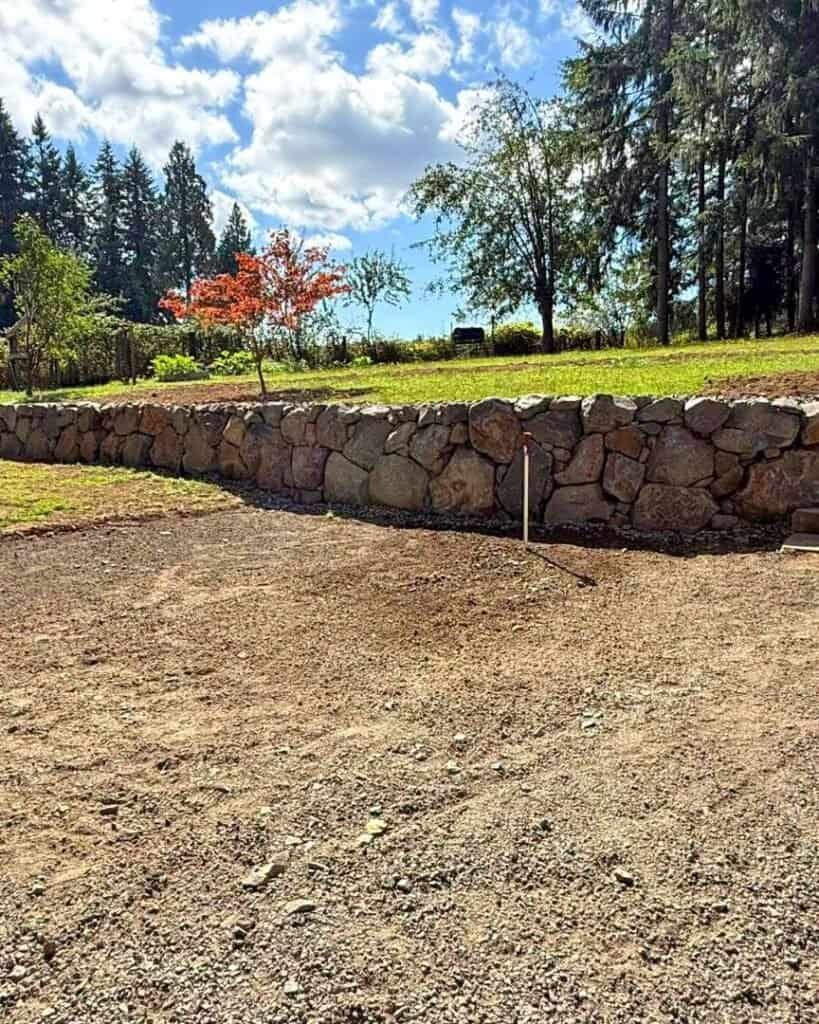
These clients wanted a solid, natural-looking retaining wall to hold back the raised lawn on their property and finish off the area around their existing concrete steps.
Sourcing the Boulders
We sourced the boulders from a local quarry and had them delivered to the site. Quarry boulders are large, heavy and durable, so they hold the bank in place with their own weight and give the wall a natural look. The finished wall stands about 4 feet high.
A Free-Draining Base
We set the wall on a base of 3" open rock. This clean, large rock has no fines, so it gives the bottom row of boulders a firm footing that drains freely and will not turn soft when it rains.
Drainage Behind the Wall
We backfilled behind the boulders with more 3" open rock and ran 4" drain pipe along the back of the wall, exiting at the far end. Proper drainage is what keeps a retaining wall standing. Without it, water builds up behind the wall and pushes against it.

Tying Into the Concrete Steps
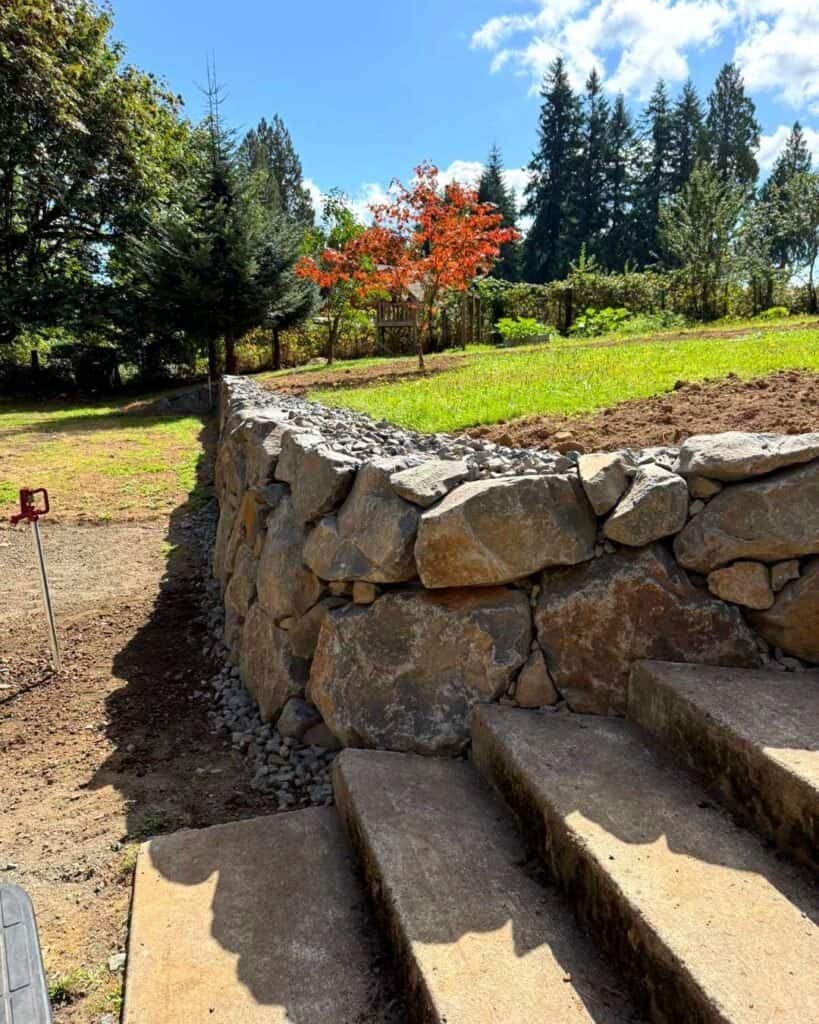
We fit the boulders tight against the existing concrete steps, so the wall and steps finish together as one clean, continuous feature. The steps now lead naturally up to the raised lawn, with the boulders framing them on the side.
The Result
The clients have a solid, natural boulder wall that holds back the lawn, drains properly and blends in with their existing steps.
Materials Used
Quarry boulders from a local quarry for a wall about 4 feet high, a 3" open rock base and backfill, and 4" drain pipe behind the wall.
What a Project Like This Costs
Typical range
$10,000 – $20,000
Boulder retaining walls like this one, about 4 feet high, with a 3" open base and backfill and drain pipe behind the wall, typically fall within this range.
What affects the cost
Every property is different, so the cost of similar projects can vary. The main factors are:
- Wall length and height. Longer and taller walls need more boulders and more excavation.
- Boulder sourcing. Boulder size, availability and the distance from the quarry.
- Drainage. The amount of drain rock and drain pipe the wall requires.
- Existing features. Fitting boulders around steps, slabs or other hardscape takes extra care.
- Site access. Lawns, buildings and slopes can limit equipment and truck access.
Planning a similar project? We're happy to talk through what you have in mind and give you a free estimate.
Common Questions
What goes behind a boulder retaining wall?
Clean, open rock such as 3" open and a perforated drain pipe. The open rock lets water drain freely, and the pipe carries it away so pressure does not build up behind the wall.
Why use 3" open rock as the base of a boulder wall?
3" open is large, clean rock with no fines. It gives the bottom row of boulders a firm, free-draining footing, so water does not soften the ground beneath the wall.
Can a boulder wall be tied into existing steps or concrete?
Yes. Setting the boulders tight against existing steps or slabs makes the wall and the hardscape look like one finished feature, with a clean transition between them.
Planning Something Similar?
See our excavation services and drainage solutions, along with our boulder retaining wall in Banks. You can also request an estimate and we will evaluate your property.
← All success stories