
If your gravel driveway is full of potholes, ruts, or washboarding, you might be wondering whether it needs a little maintenance, a fresh layer of gravel, or a complete overhaul.
The good news is that even driveways in pretty rough shape can often be brought back to life without starting from scratch.
At M4 Landworks, we approach gravel driveway repairs in three general categories: surface regrading, regrading and resurfacing, and complete restoration. The right option depends on how much usable gravel remains, the condition of the underlying base, and what you’re trying to accomplish.
Here’s how we determine which approach makes the most sense.
1. Gravel Driveway Regrading: Making the Most of What’s Already There
Best for
Driveways with potholes, washboarding, ruts, or uneven surfaces that still have enough usable gravel to work with.
Regrading is typically the most cost-effective way to repair an existing gravel driveway because we’re working with the material that’s already there rather than bringing in truckloads of new rock.
The biggest factor is having enough workable surface gravel, typically 3/4-inch minus crushed rock. This material contains a mixture of crushed stone and smaller particles that can be loosened, redistributed, reshaped, and compacted back into a firm driving surface.
How Does Gravel Driveway Regrading Work?
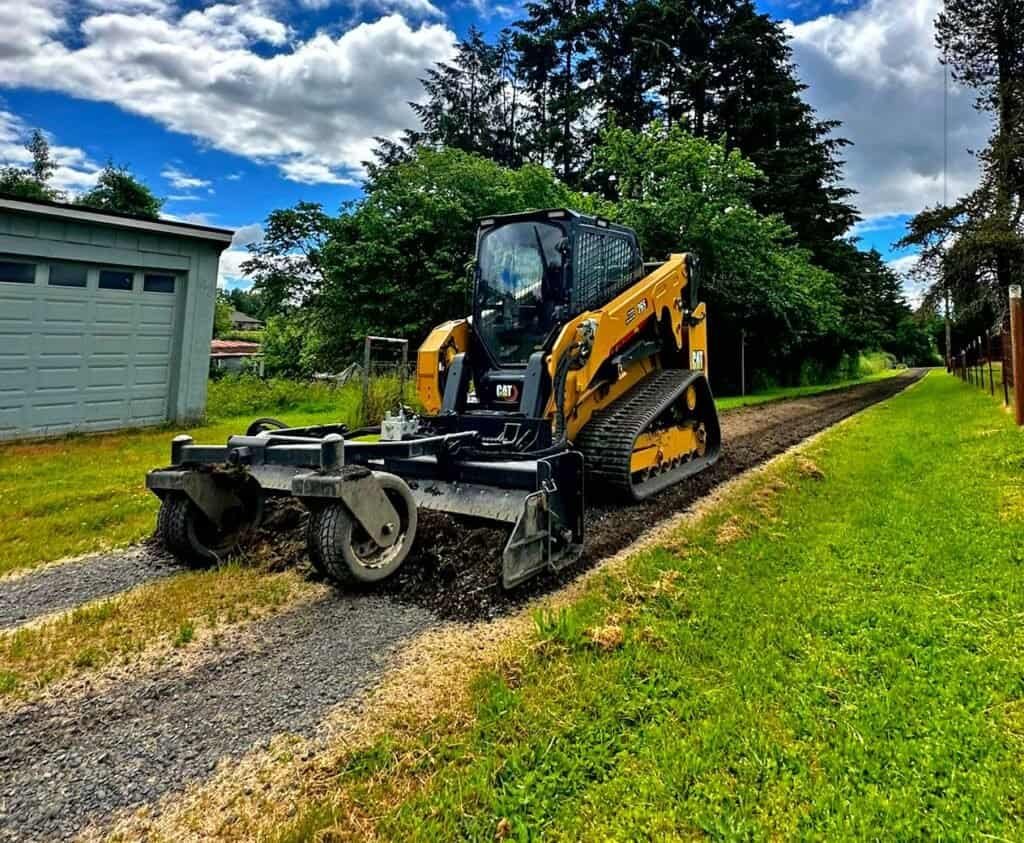
We use a piece of equipment called a soil conditioner, commonly known as a Harley rake, to rework the existing driveway surface.
Unlike a traditional grading blade that primarily moves material around, a soil conditioner uses a rotating drum with carbide teeth to break up the compacted surface, loosen existing gravel, and work through potholes and washboarding.
This allows us to cut out surface defects rather than simply covering them up.
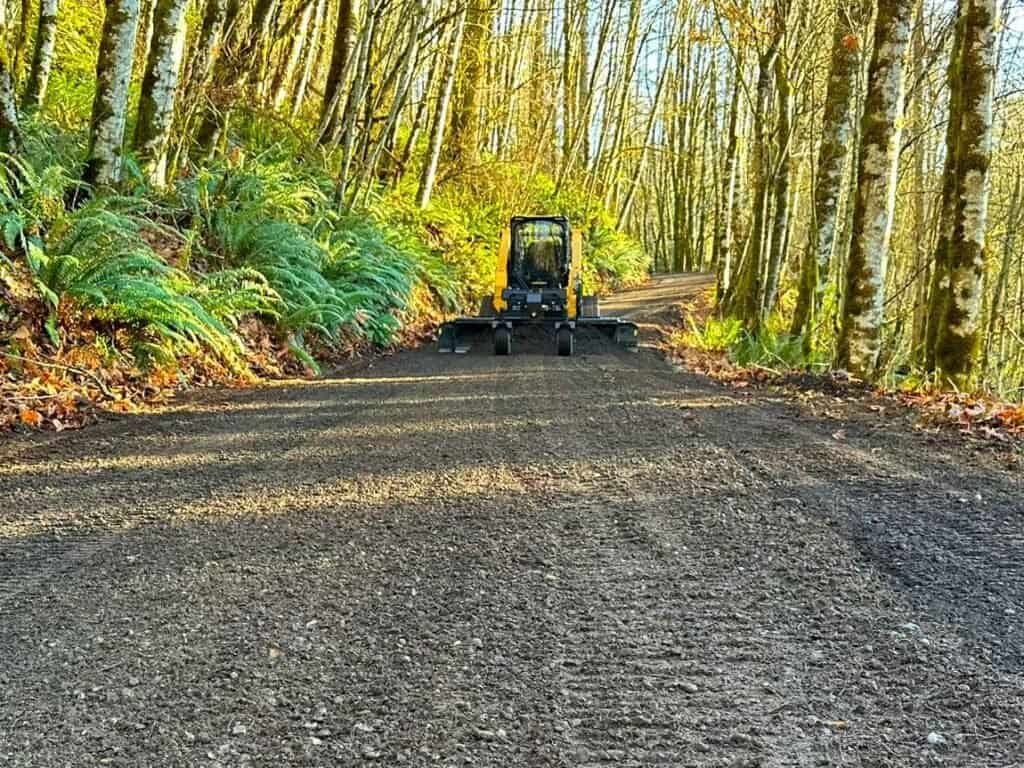
Once the existing gravel has been reworked, we redistribute the material, correct uneven areas, and reshape the driveway to establish the proper crown or slope. The goal is to get rainwater flowing off the driving surface rather than collecting in low spots.
Finally, everything is finish-graded and compacted with a roller to create a firm, smooth, and consistent surface.
When there’s enough usable gravel remaining, this process can make a significant difference without needing to purchase additional material.
Typical project pricing · Regrading
$2,800–$4,500
Best value when the existing gravel is still in good condition and there’s enough material to properly reshape the driveway.
See all project pricing2. Gravel Driveway Resurfacing: When New Gravel Is Needed
Best for
Driveways where the original surface gravel has worn away, leaving larger base rock exposed or too little usable material for regrading.
Over time, the smaller material in a gravel driveway can wear away, wash off the surface, or become displaced through regular vehicle traffic.
Eventually, you’re left with larger rocks, exposed base material, and a rough surface that can’t be properly reworked.
If you’re starting to see a lot of 1-1/2-inch rock, 3-inch rock, or pit run material throughout your driveway, that’s usually a good indication that the original finish gravel is gone.
These larger materials serve an important purpose in the underlying structure of a driveway, but they aren’t what we want to bring to the finished surface.
A soil conditioner also can’t effectively regrade a driveway that’s primarily exposed base rock. Trying to aggressively work through that material can disturb the underlying structure rather than improve the surface.
What’s Involved in Resurfacing a Gravel Driveway?
The first step is preparing the existing driveway. We’ll do what we can to break up potholes, correct uneven areas, and address other surface defects without unnecessarily disturbing the structural base.
Once the preparation is complete, we bring in fresh 3/4-inch minus crushed gravel to rebuild the driving surface.
Rather than applying a thin layer of gravel just to cover up the existing rock, we install enough material to properly cover the base, reshape the driveway, and establish the crown or slopes needed for drainage.
That additional gravel is important. It gives us material to work with when correcting low spots, improving the overall grade, and raising the finished surface where necessary.
Everything is then finish-graded and roller-compacted, creating a smoother, more uniform driving surface.
The result is a driveway with fresh gravel, corrected grading, and enough surface material for future maintenance.

Typical project pricing · Resurfacing
$5,000–$10,000
An excellent option when the underlying driveway is still in reasonable condition but the existing surface has worn beyond what regrading alone can repair.
See all project pricing3. Complete Gravel Driveway Restoration: When It’s Time for a Bigger Improvement
Best for
Severely deteriorated driveways, unfinished construction driveways, areas with failing base material, or homeowners looking for a complete driveway transformation.
Some driveways need more than surface repairs and a fresh layer of gravel.
Maybe the driveway was originally built during home construction but never properly finished. Maybe years of wear have left it uneven, poorly draining, and full of soft spots. Or perhaps you’re ready to widen the driveway, improve parking areas, and give the entire property a much-needed upgrade.
These are the projects where a complete gravel driveway restoration makes sense.
Despite the name, a complete restoration doesn’t necessarily mean removing the entire driveway and starting over.
In many cases, we’re following the same general process as resurfacing, just on a more extensive scale. We’re making larger grading corrections, bringing in significantly more material, repairing underlying problems, and making improvements that go beyond the existing driving surface.
What Goes Into a Complete Driveway Restoration?
Depending on the condition of the driveway and the improvements needed, the work may include:
- Surface preparation: Removing vegetation, accumulated soil, and unsuitable material from affected areas.
- Base repairs: Reinforcing soft spots or deteriorated sections with larger structural aggregate where needed.
- Driveway improvements: Widening narrow areas, expanding parking, correcting slopes, and improving drainage.
- New surface gravel: Installing a substantial layer of 3/4-inch minus to establish the desired finished grade.
- Final grading and compaction: Shaping and roller-compacting the new material for a smooth, firm, and consistent finish.
The amount of work varies considerably from one driveway to another. Some need extensive base repairs, while others simply need a significant amount of new gravel and grading to bring everything up to the desired condition.
The goal is to address the existing problems while creating a driveway that looks great, drains properly, and is easier to maintain moving forward.
Included with complete restorations
Two Years of Maintenance Included
One of the benefits of our complete driveway restoration projects is that we include two years of complimentary maintenance.
We return twice per year, typically in the spring and fall, to evaluate the driveway and perform light grading or other routine surface maintenance as needed.
Even a properly restored gravel driveway will experience some movement and settling from regular use. These maintenance visits allow us to address minor surface issues and help keep everything in good shape during the first two years.
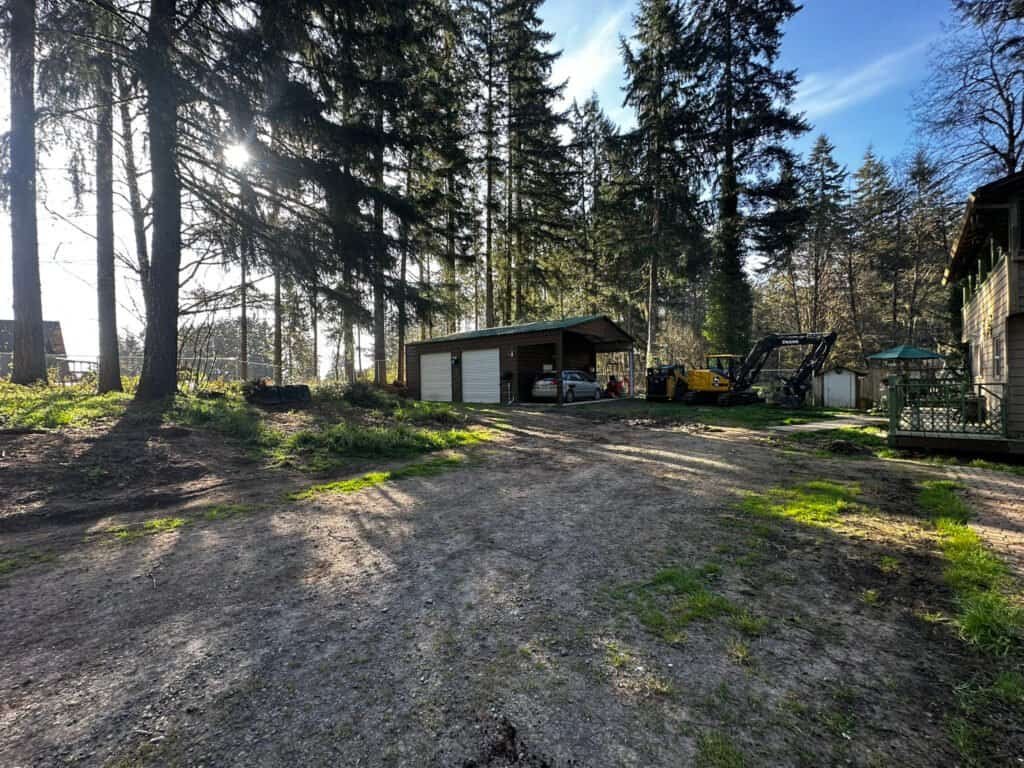 Before
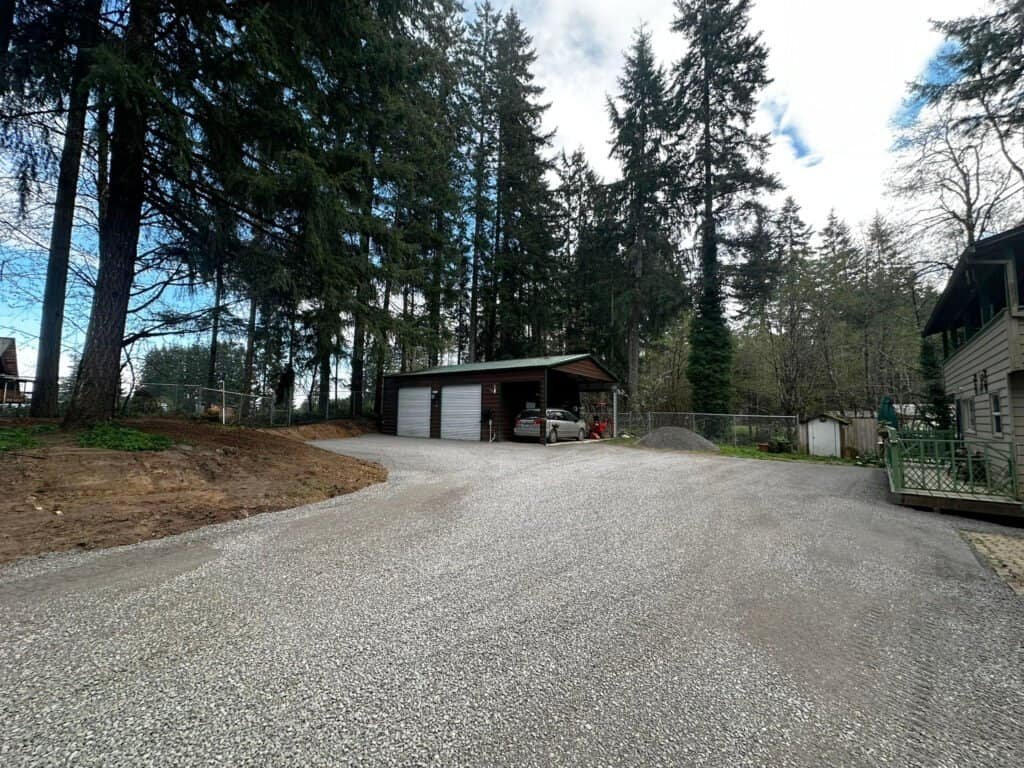 After
Typical project pricing · Complete restoration
$10,000–$20,000
Ideal for homeowners looking for substantial improvements, repairs to underlying problem areas, and a complete driveway makeover.
See all project pricingHow Do You Know Which Gravel Driveway Repair Is Right for You?
The biggest factor isn’t necessarily how many potholes you have or how rough the driveway looks. It’s the condition of the material that’s already there.
A driveway covered in potholes might only need regrading if there’s plenty of good surface gravel remaining. On the other hand, a driveway that looks relatively flat might require resurfacing because all the usable finish gravel has worn away.
Here’s a simple way to look at it:
The existing driveway has enough usable surface gravel, but potholes, ruts, or poor grading need to be corrected.
The driveway has a reasonably solid base, but the finish gravel is worn out or missing and needs to be replaced.
The driveway needs more substantial work, such as base repairs, additional aggregate, drainage improvements, widening, or significant changes to the existing grade.
Drainage is another important consideration. Regardless of which repair option makes sense, water needs somewhere to go.
Simply adding gravel over existing potholes or low spots may temporarily improve the appearance, but it doesn’t necessarily fix the conditions that caused those problems in the first place.
That’s why we focus on correcting the surface, improving drainage where possible, and compacting everything properly rather than just spreading new gravel over the top.
How Much Does Gravel Driveway Repair Cost?
Gravel driveway repair costs depend on several factors, including the driveway’s length and width, existing material, drainage conditions, accessibility, and how much new aggregate is needed.
Regrading is typically the most affordable approach because it uses the material already in place. Resurfacing costs more because of the additional gravel, trucking, and installation. Complete restorations generally involve the most material and equipment work, particularly when base repairs or driveway improvements are included.
Typical project pricing
The pricing ranges above represent typical M4 Landworks projects, not fixed prices. Every property is different, and the actual cost depends on what your driveway needs.
You can explore our typical project pricing to get a better idea of what different gravel driveway improvements may cost.
Frequently Asked Questions
Yes. If the driveway has enough usable 3/4-inch minus or similar crushed surface gravel, we can often repair potholes, reshape the surface, and compact the existing material without adding new rock. The key is having enough workable material remaining.
If larger base rock, such as 1-1/2-inch or 3-inch material, is showing throughout the driveway, there’s a good chance the original finish gravel has worn away. When there isn’t enough smaller material to rework, adding new surface gravel is usually necessary.
Not necessarily. If portions of the existing driveway are structurally sound, they can often be incorporated into the restoration. Complete restoration generally means making more extensive repairs and improvements, not automatically excavating the entire driveway.
Not always. If the existing potholes, poor grading, or drainage problems aren’t addressed first, simply covering them with new gravel may lead to the same problems returning. Proper surface preparation, reshaping, and compaction are important parts of a lasting repair.
Free estimates
Ready to Improve Your Gravel Driveway?
Whether your driveway needs a simple regrade, fresh gravel, or a more complete restoration, the best place to start is understanding what’s already there and what it will take to improve it.
At M4 Landworks, we provide gravel driveway repair, resurfacing, and restoration services throughout Columbia County, portions of Washington County, and Northwest Portland.
If you’re considering improvements to your gravel driveway, take a look at our gravel driveway services or request a free estimate. We’ll take a look at your driveway, discuss your options, and help determine the approach that makes the most sense for your property.