The Problem
When this family bought their home in St. Helens, the backyard was in poor condition. It held broken concrete, old planter boxes, piles of brush and debris, and a wide range of miscellaneous waste. Pavers ran throughout the yard, many of them hidden beneath grass and weeds.
They wanted a clean slate: everything removed and the yard prepared for seed, so they could establish a lawn and begin their landscaping plans.
 Before
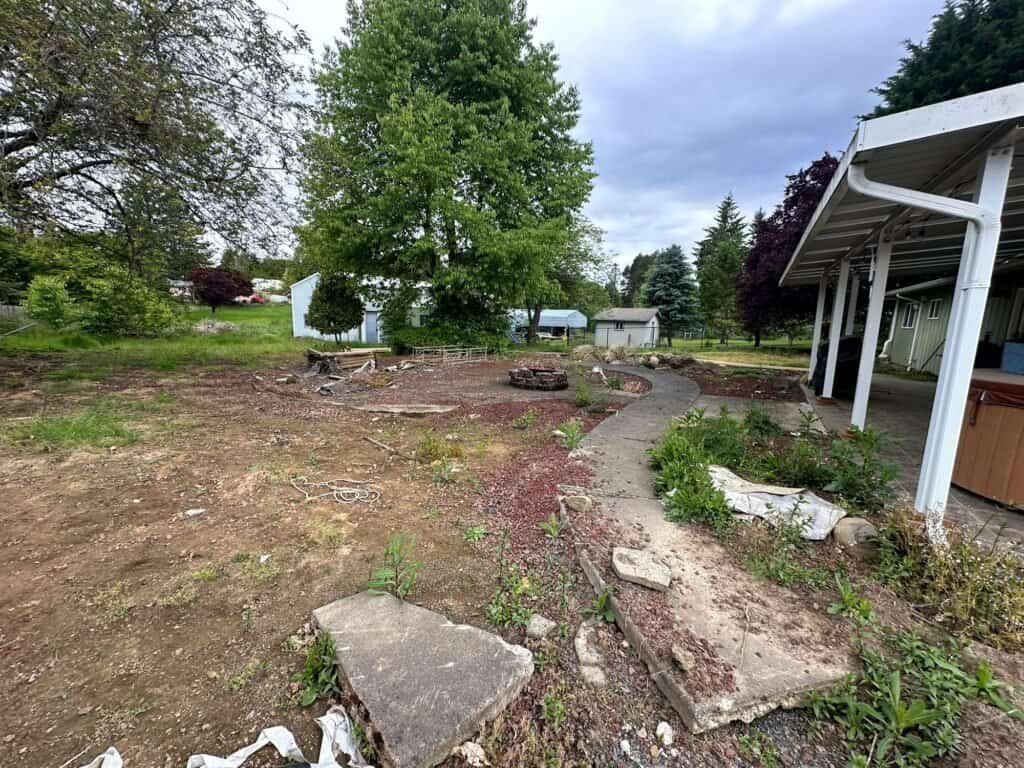 Before
 Before
Clearing It All Out
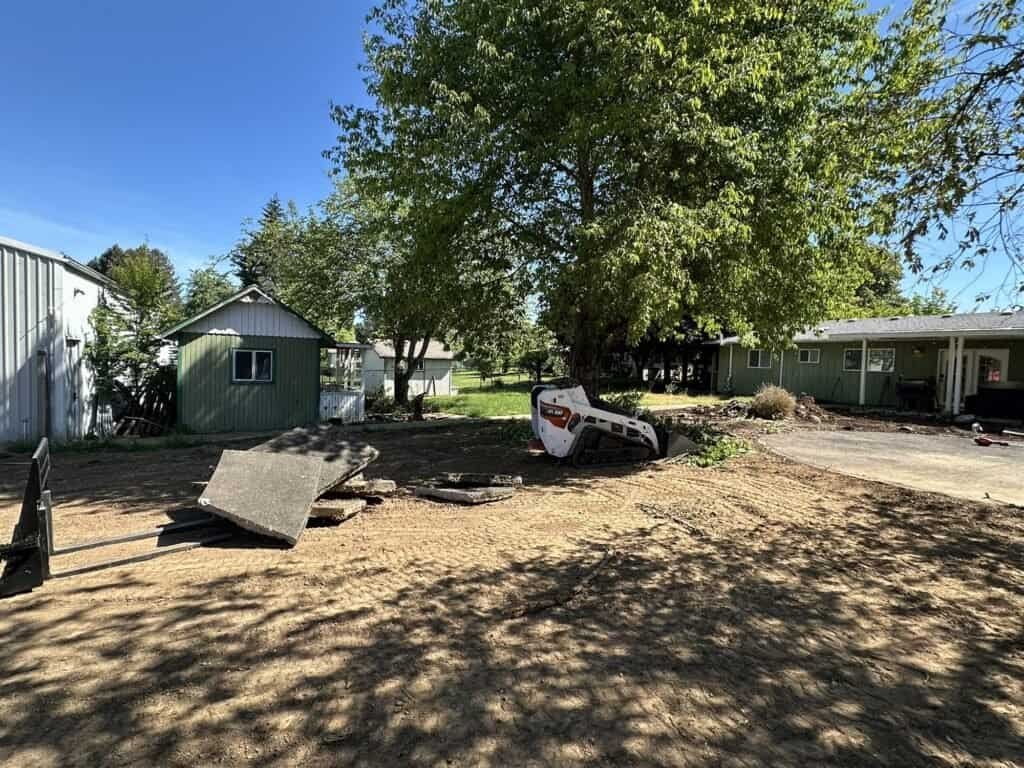
We began by removing everything that did not belong, including the broken concrete, planter boxes, pavers, brush, debris and miscellaneous waste. Because many of the pavers were hidden, we worked systematically across the entire yard to locate and remove them, so none would remain beneath the new lawn.
Everything we removed was loaded and hauled off site, leaving the family with nothing to dispose of.
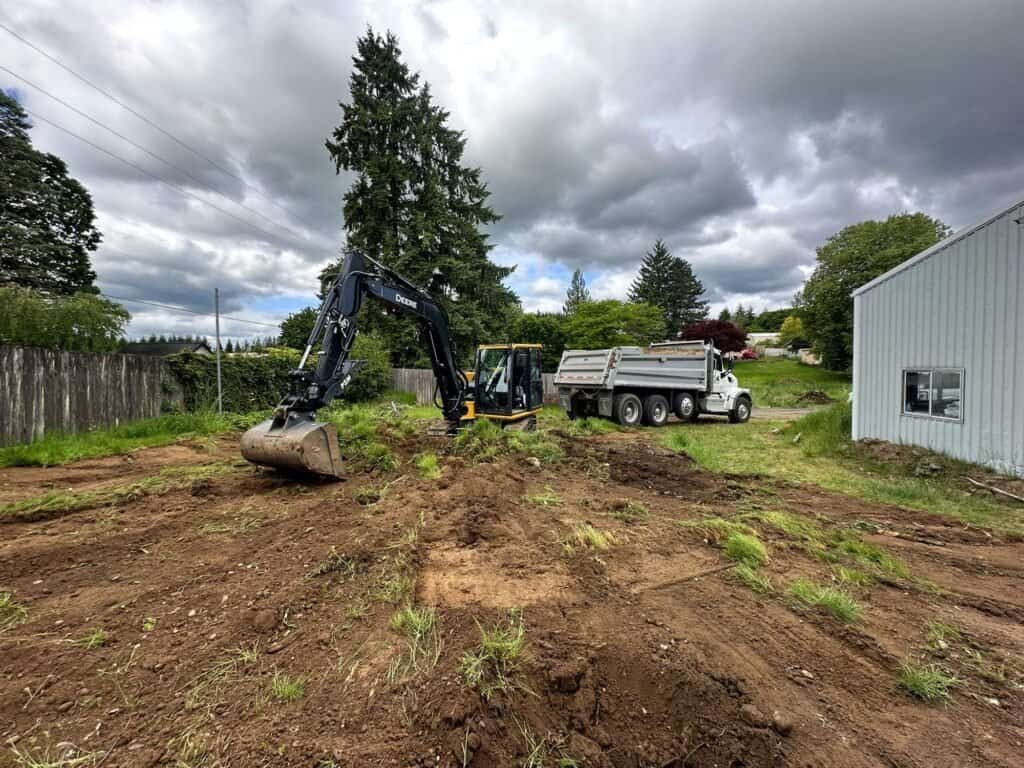
Stripping the Grass and Weeds
Next, we stripped the existing grass, weeds and vegetation across the yard. Seeding over patchy grass and weeds allows them to grow back through the new lawn, so starting from clean soil gives the new grass the best chance to establish.
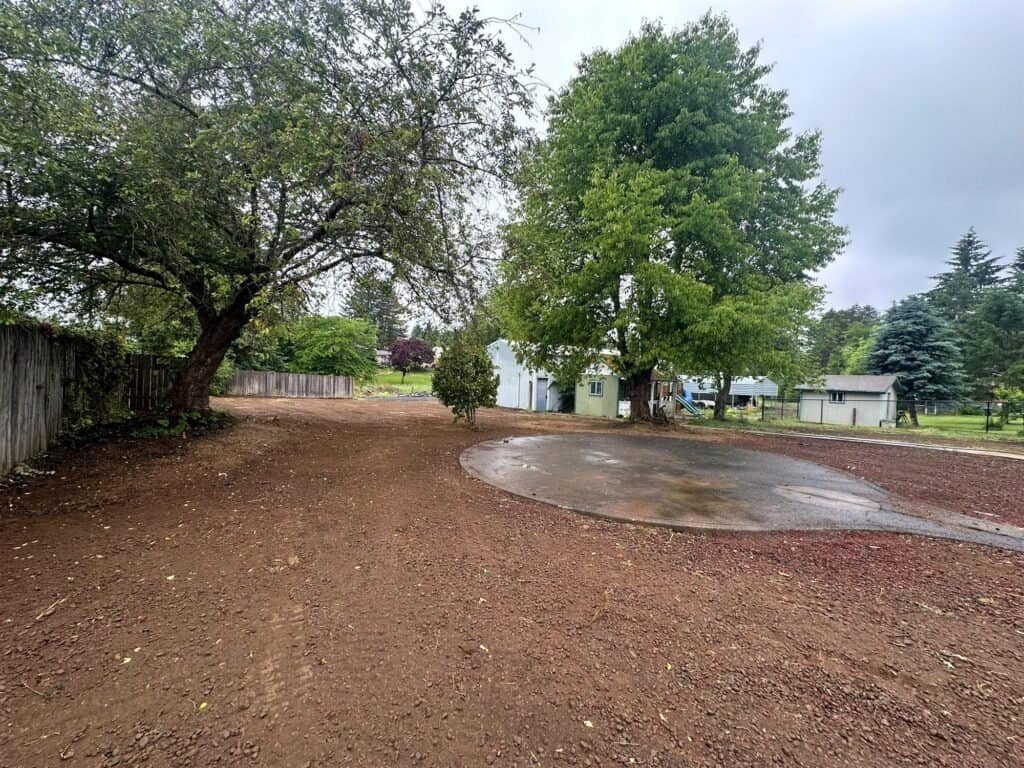
Finishing With the Soil Conditioner
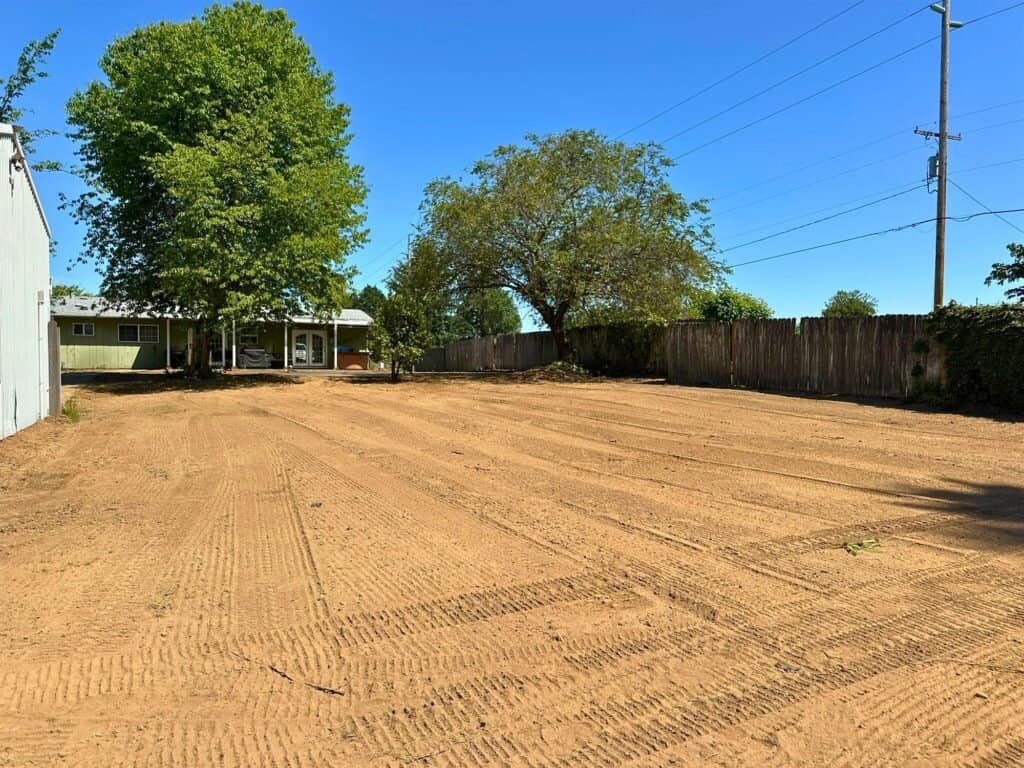
We then used our soil conditioner, a skid steer attachment with a rotating drum that breaks up the top layer of soil, pulls out leftover rock and roots, and levels the ground as it works. We ran it across the entire yard to remove the remaining rock and grade a smooth, even surface.
This creates a good seedbed, and a smooth, rock-free yard is much easier to mow and maintain.

The Result
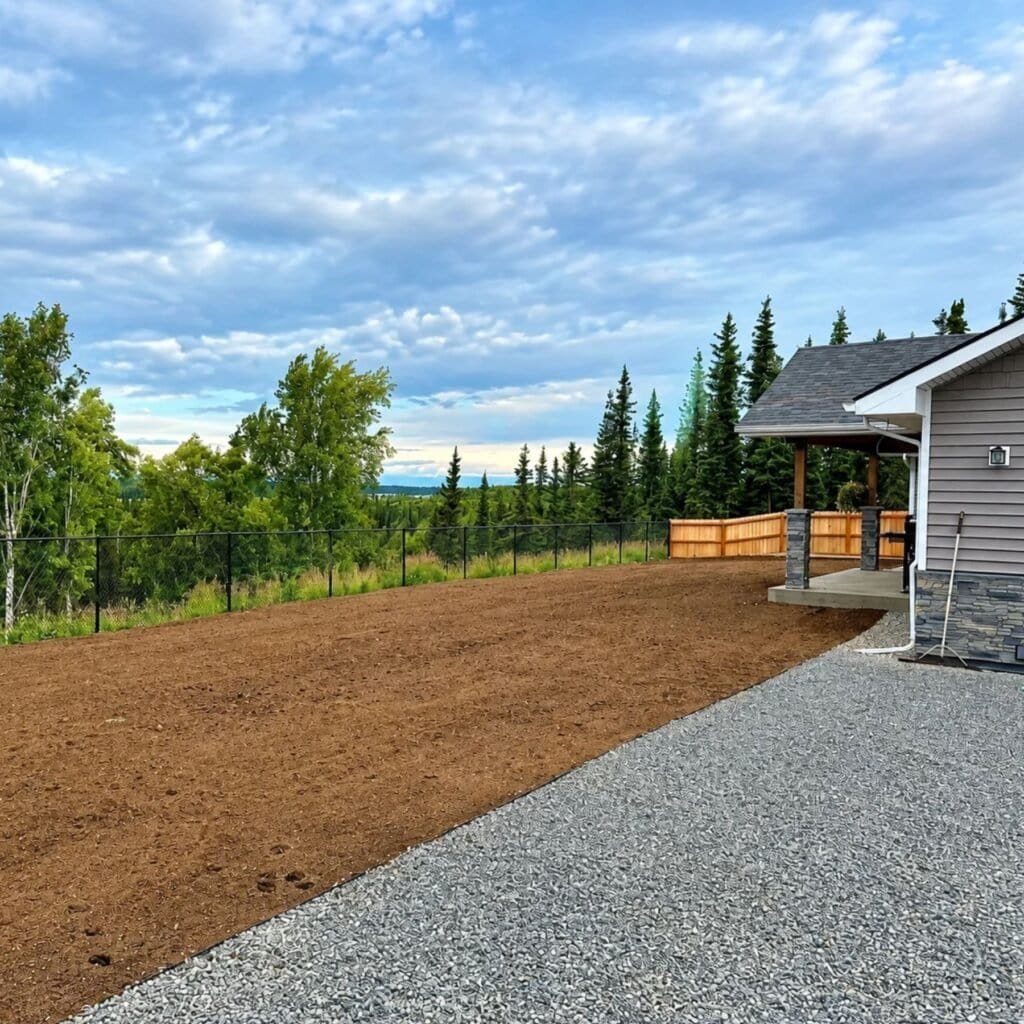
The family now has a usable backyard that is clean, smooth and ready for seed. They were very pleased with the result and eager to begin the next phase of their plans.
 After
Equipment Used
An excavator, a compact track loader and a mini track loader for clearing and loading, a dump truck to haul everything away, and a soil conditioner for the final grading.
What a Project Like This Costs
Typical range
$5,000 – $10,000
Backyard cleanups like this one, with debris, concrete and paver removal, hauling and final grading ready for seed, usually fall in this range.
What affects the cost
Every property is different, so the cost of similar projects can vary. The main factors are:
- Volume of material removed. The amount of debris, concrete and old landscaping determines how many loads are hauled off.
- Disposal costs. Disposal fees and haul distance vary by the type of material.
- Concealed materials. Buried pavers, concrete or rock add time to locate and remove.
- Site access. Gates, fences, buildings and trees can limit equipment size or require additional trips.
- Area size. Larger areas take longer to clear, strip and grade.
- Soil conditions. Wet or rocky soil may require additional work to achieve a smooth finish.
Planning a similar project? We're happy to talk through what you have in mind and give you a free estimate.
Common Questions
What is a soil conditioner?
A soil conditioner is a skid steer attachment with a spinning, toothed drum. It breaks up the top layer of soil, pulls out rocks and roots, and leaves a smooth, level surface that's ready for seed.
How do you prepare a backyard for grass seed?
Clear out the debris, old concrete, pavers and planters, strip the existing grass and weeds, remove the rock left in the soil, then grade the surface smooth so it drains well and is easy to mow.
Do you haul away the debris and broken concrete?
Yes. On cleanup jobs like this one, we load and haul off everything we remove, including broken concrete, pavers, planter boxes, brush and garbage.
Planning Something Similar?
See our St. Helens land clearing, brush and land clearing, yard and land grading and St. Helens site preparation, or request an estimate and we'll take a look at your property.
← All success stories