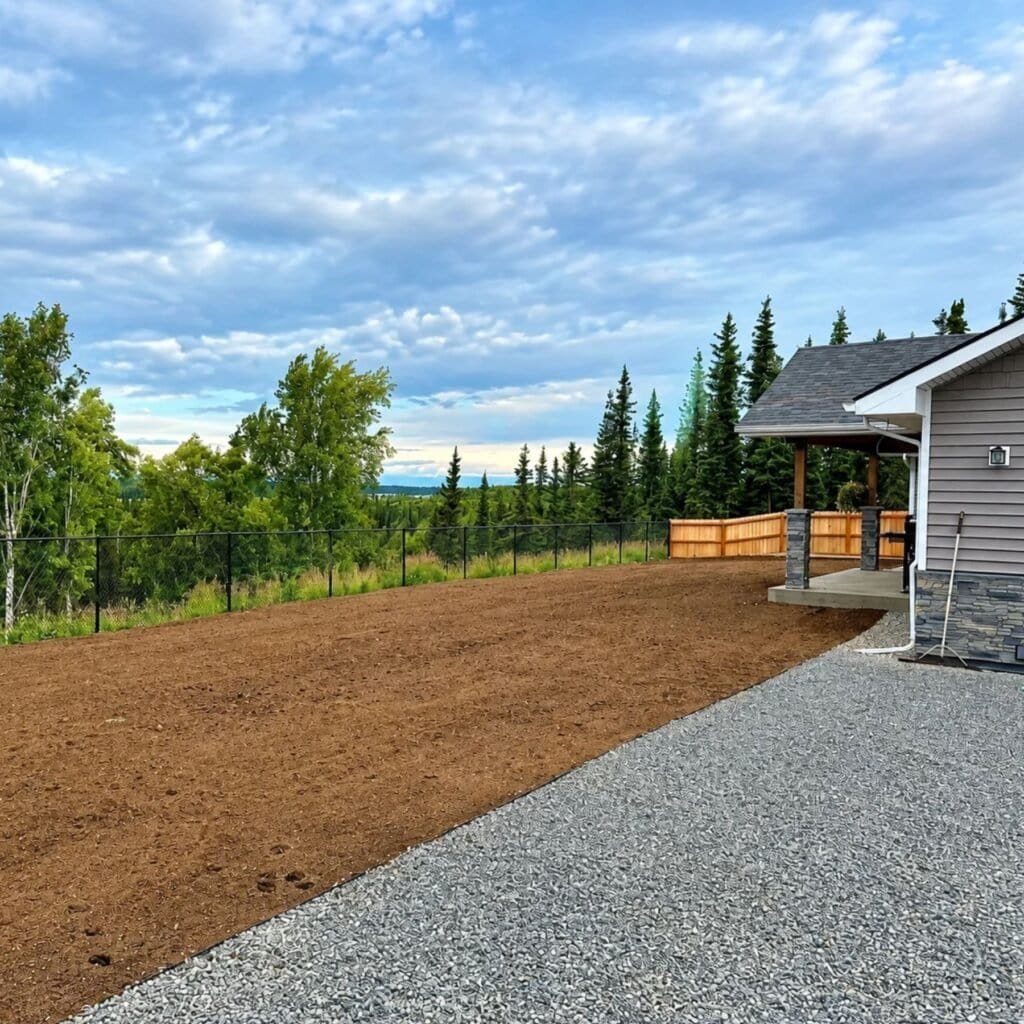
The Project
This side yard was used mainly by the clients' dogs. Each year it became swampy and muddy, and the dogs tracked mud back into the house every day.
The clients asked for a clean, solid surface that would eliminate the mud, be easy to maintain and last.
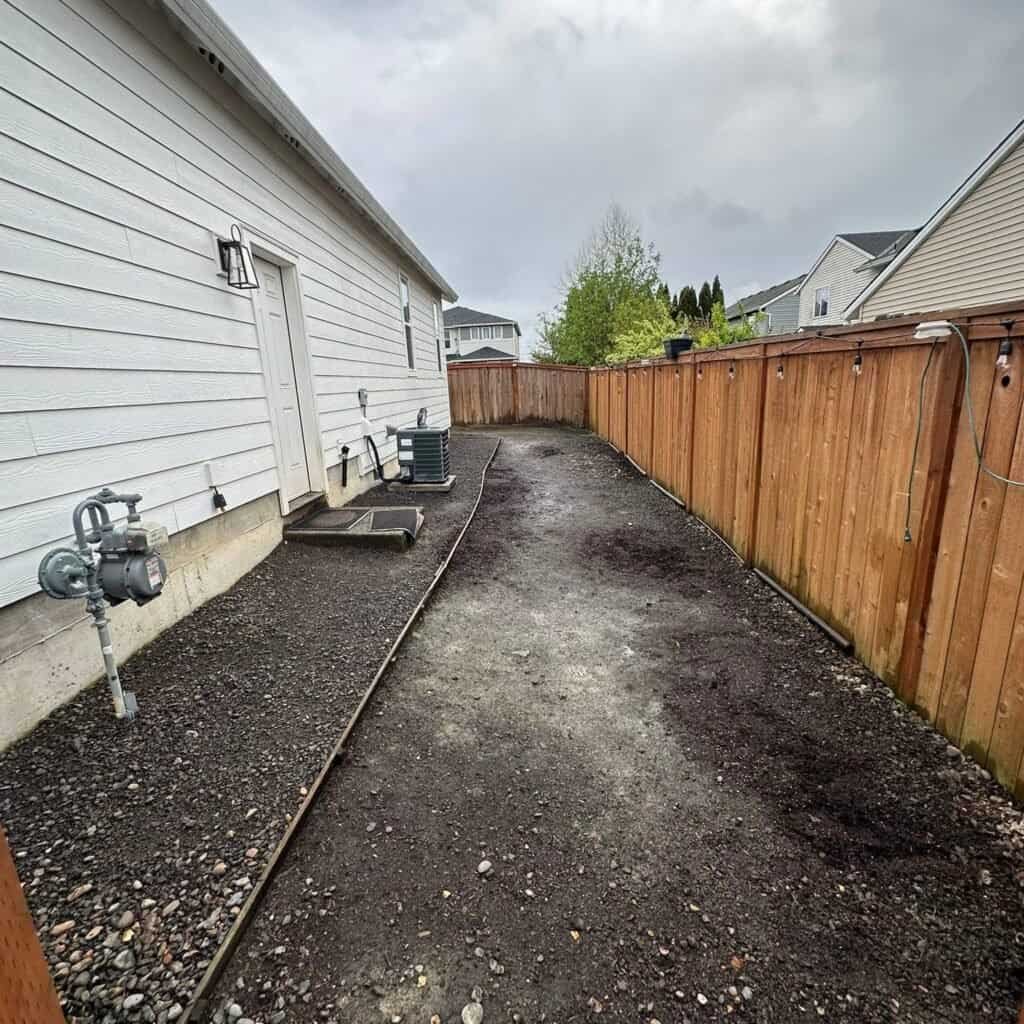 Before
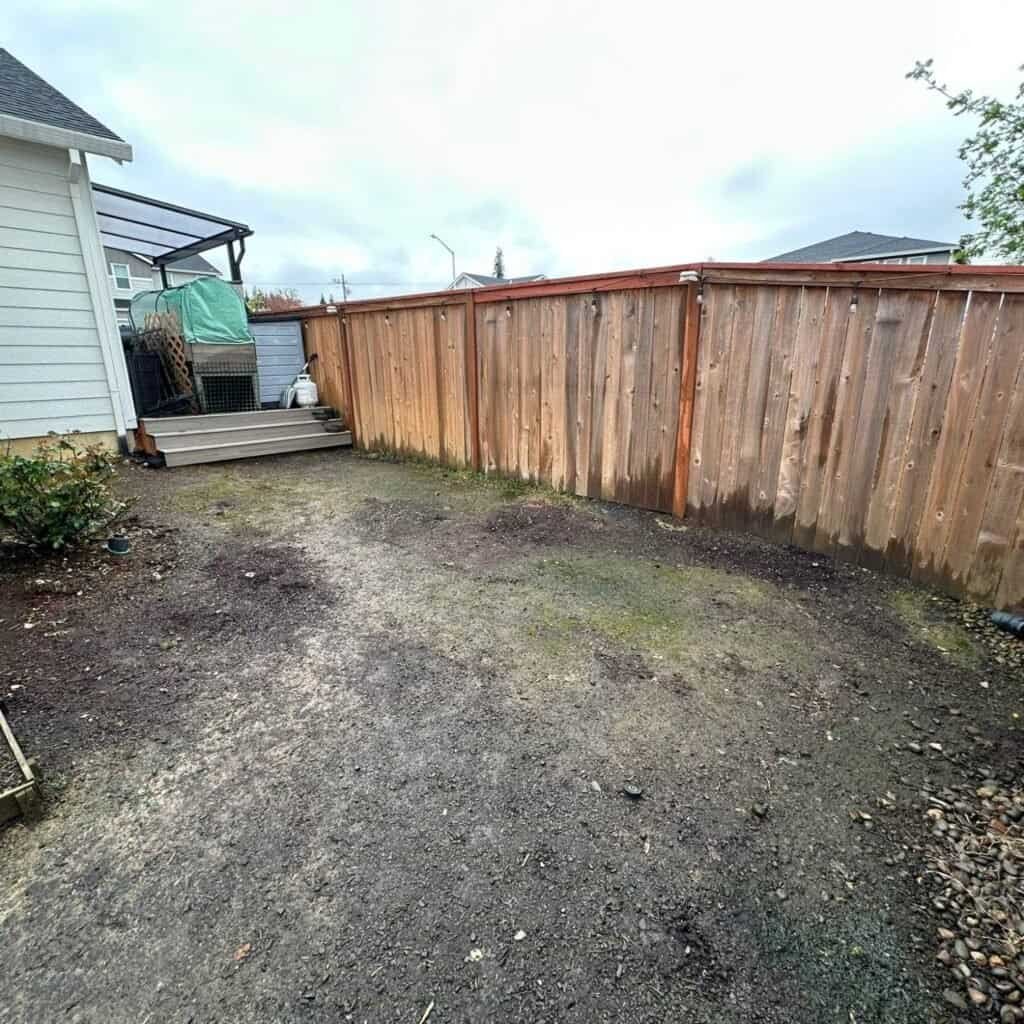 Before
Working With the Existing Drainage
The side yard was a very low area, but a French drain already ran along the inside of the fence line. That simplified the project, since no material needed to be removed. We rough graded the area and removed the old wooden border.
A Solid 3/4" Minus Surface
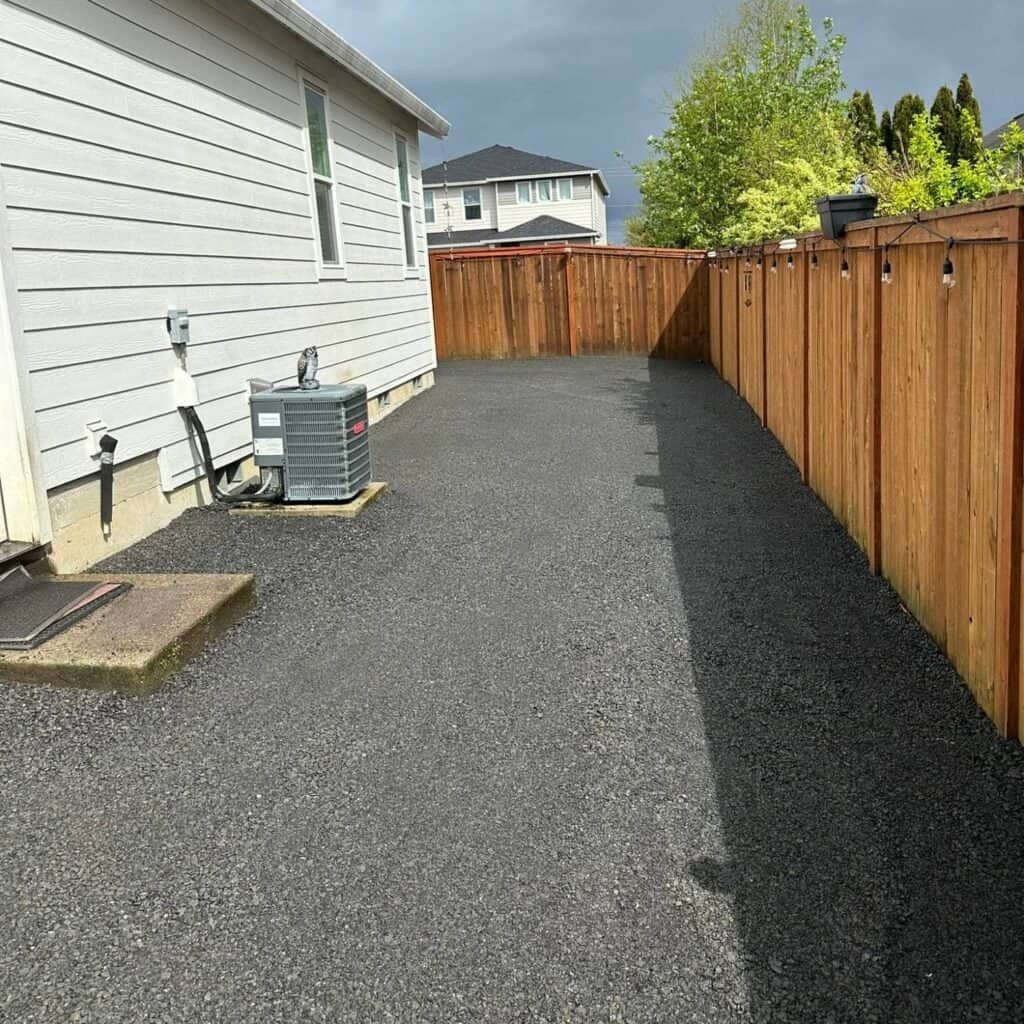
We installed 3/4" minus throughout the entire area, then graded and compacted it. The surface slopes away from the house and toward the existing French drain, so water moves off the yard instead of collecting.
 After
 After
The Front Side Yard
The clients also asked us to simplify the side yard at the front of the house. We followed the same approach, but used 1/4" to 3/4" round rock instead of 3/4" minus for a more decorative look. The area is now clean and requires little to no maintenance.
 Before
 After
The Result
The mud is gone, the dogs have a solid surface, and the clients have the clean, low-maintenance yard they were looking for.
Materials Used
3/4" minus in the side yard, graded and compacted to slope toward the existing French drain, and 1/4" to 3/4" round rock in the front side yard.
What a Project Like This Costs
Typical range
Under $5,000
Side yard projects like this one, with rough grading, compacted 3/4" minus and a decorative rock area, typically fall within this range.
What affects the cost
Every property is different, so the cost of similar projects can vary. The main factors are:
- Area size. The size of the yard determines the total amount of rock required.
- Drainage. Whether drainage is already in place or needs to be added.
- Material choice. Crushed rock and decorative round rock are priced differently.
- Haul distance. The distance between the quarry supplying the rock and the job site.
- Site access. Narrow side yards, gates and fences can limit equipment access.
Planning a similar project? We're happy to talk through what you have in mind and give you a free estimate.
Common Questions
What is the best gravel for a dog run or dog yard?
3/4" minus compacts into a firm, even surface that drains and stays solid underfoot, so dogs are not tracking mud back into the house.
How do you keep a side yard from getting muddy?
Grade the area so water flows away from the house toward a drain, then cover it with compacted gravel. In this yard, an existing French drain along the fence line carries the water away.
What is the difference between 3/4" minus and round rock?
3/4" minus is crushed rock with fines that compacts into a solid surface for foot traffic. Round rock does not lock together, so it is better suited to decorative, low-traffic areas.
Planning Something Similar?
See our drainage solutions, St. Helens site preparation and St. Helens gravel delivery, or request an estimate and we will evaluate your property.
← All success stories