The Problem
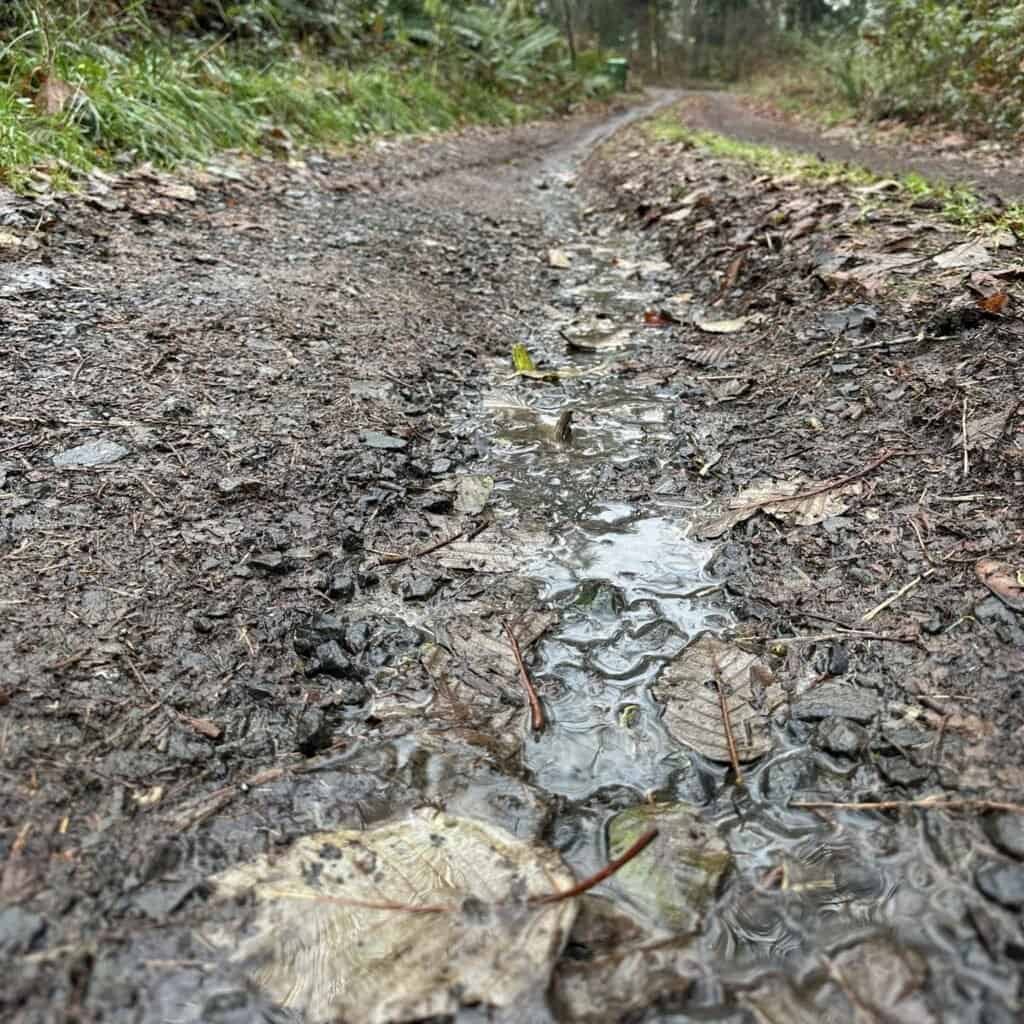
This driveway shows what happens without ditches or proper drainage: water runs down the center of the driveway and, over time, carves a deep channel.
During heavy rain, water flowed down the driveway like a small stream. The channel had reached about a foot deep, and the driveway was becoming impassable. The clients asked us to repair the entire length.
 Before
Why Adding Gravel Is Not Enough
Erosion is addressed the same way as potholes. Placing gravel over eroded areas is not a lasting fix, because it will wash out again.
The base and the hard surface beneath it must be broken up so water can drain, and the driveway must be reshaped before any new material is added. (Learn more about why gravel driveways get potholes.)
 Before
Breaking Up and Reshaping the Driveway
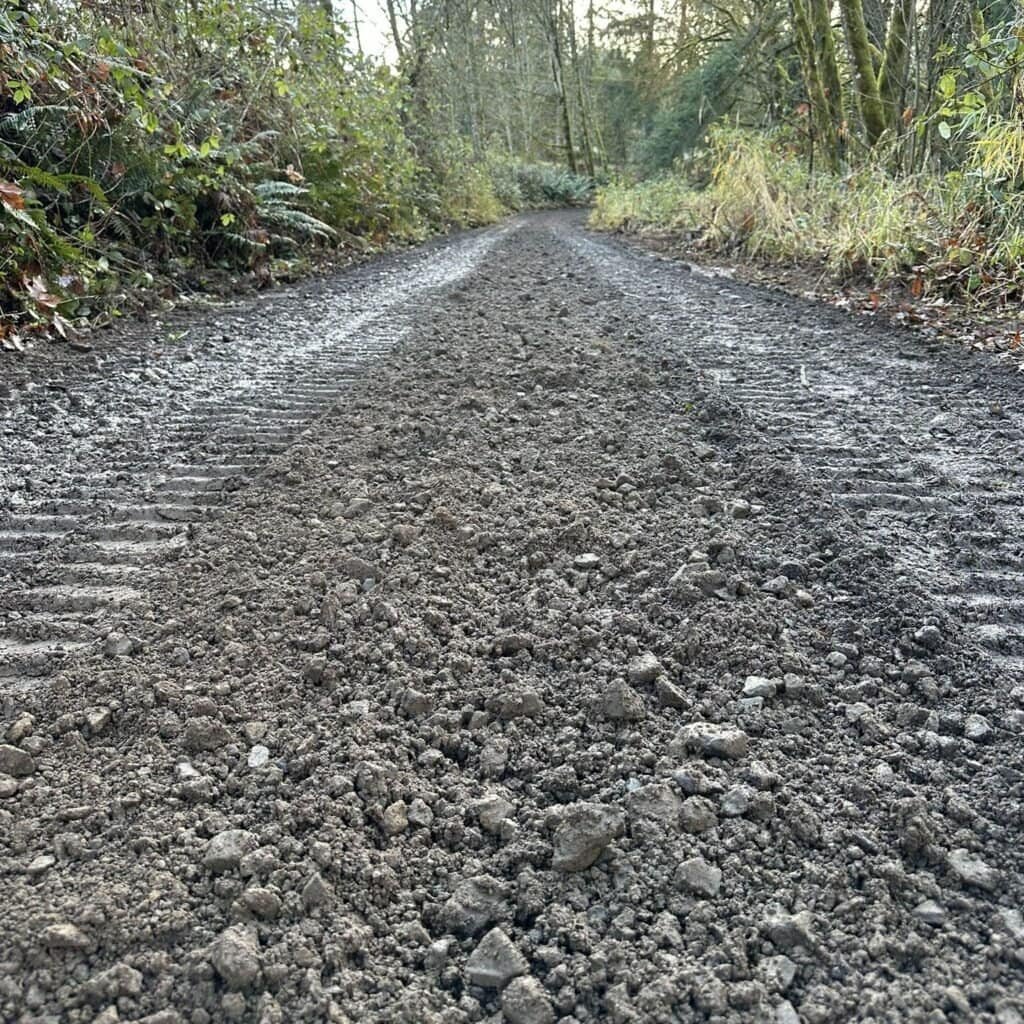
We used our soil conditioner to grind up the entire driveway, cutting out the potholes, defects and drainage problems. We reused as much of the existing material as possible to reshape the driveway with a crown, so water sheds off the sides instead of running down the middle.
Building It Up About 6 Inches
Achieving a proper crown required additional gravel. The center of the driveway was so low that we needed to raise it about 6 inches to shed water to the sides.
Because there was some mud on this driveway, we started with 1-1/2" minus for a stronger base. We finished with a heavy top coat of 3/4" minus, graded to the crown and compacted.

What About Ditches?
This driveway still needs ditches. The homeowners were aware of that, but ditches were not in the budget for this phase.
Even without ditches, directing water off the driveway rather than down the middle will significantly extend its life.
The Result
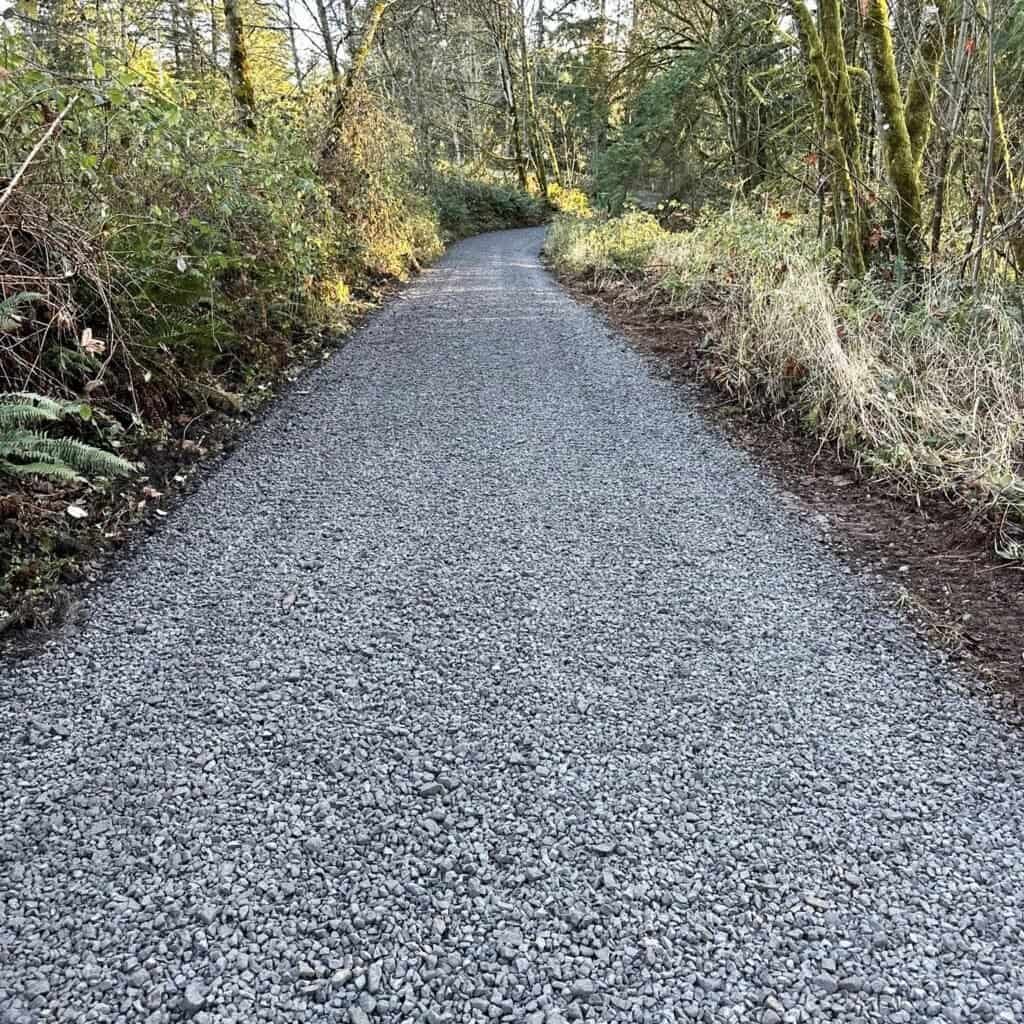
The channel is gone, and the driveway now sheds water off both sides. We returned a few years later for other work on the property, and the driveway was holding up well.
 After
 After
Materials Used
The existing driveway material, ground up and reused to reshape the crown, then a 1-1/2" minus base and a heavy top coat of 3/4" minus gravel, building the surface up about 6 inches, graded and compacted.
What a Project Like This Costs
Typical range
$5,000 – $10,000
Driveway erosion repairs like this one, with the base broken up, the driveway reshaped and built up with new gravel, usually fall in this range.
What affects the cost
Every property is different, so the cost of similar projects can vary. The main factors are:
- Haul distance. The distance between the quarry supplying the material and the job site.
- Material pricing. Rock prices vary by quarry and by material type.
- Length and condition of the driveway. Longer driveways and deeper erosion take more time and more rock.
- Reusing existing material. The more existing gravel that can be reused, the less new rock is needed.
- Drainage work. Adding ditches or culverts is extra work beyond reshaping the driveway.
Planning a similar project? We're happy to talk through what you have in mind and give you a free estimate.
Common Questions
Why does water run down the middle of my gravel driveway?
Without ditches or a crown, water follows the lowest path, which is usually the center of the driveway. Over time it carves a channel that keeps getting deeper. Reshaping the driveway with a crown sends the water off the sides instead.
Can you just add gravel to an eroded driveway?
No. New gravel over an eroded, hard-packed surface just washes out again. The base has to be broken up so water can drain, the driveway reshaped, and then new material added and compacted.
Do I need ditches along my gravel driveway?
Ditches are the best long-term fix for drainage. But even without them, getting water to shed off the driveway with a proper crown will significantly extend its life.
Planning Something Similar?
See our St. Helens gravel driveway repair, St. Helens drainage solutions and gravel driveway services, or request an estimate and we'll take a look at your property.
← All success stories