
The Project
This client asked us to install a gravel path from the side of his house, around the back, to the far side.
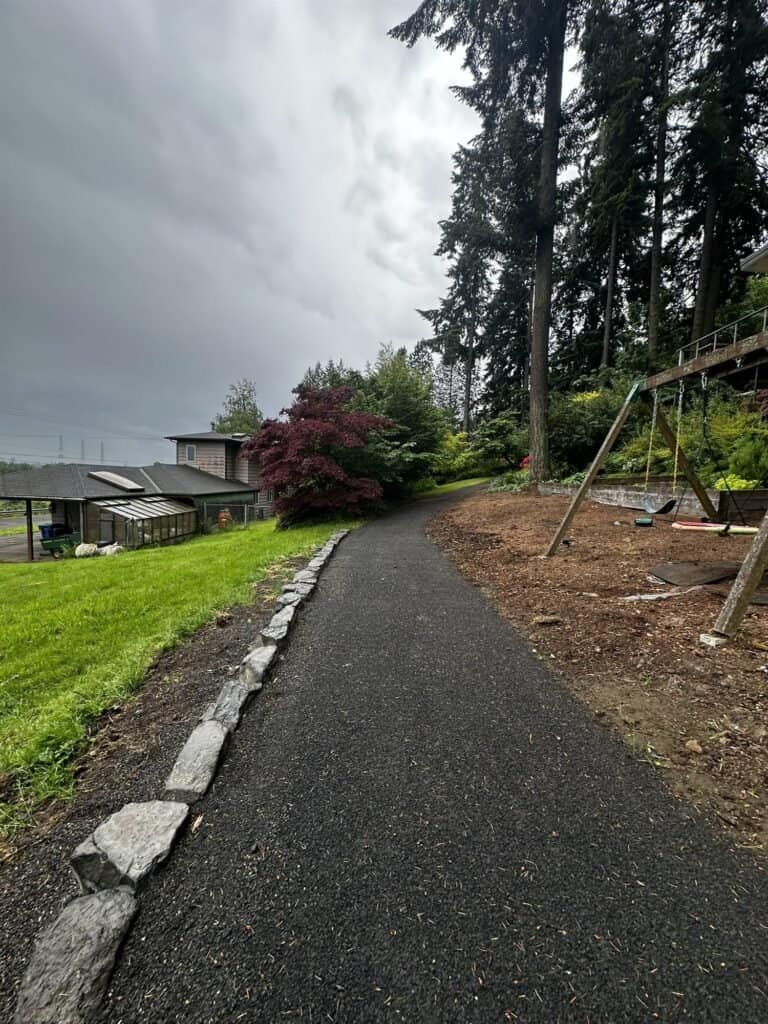
Our scope was to install the path. His landscapers would then line the full length of the pathway with boulders.

Working Through the Wet Months
The path was installed during the wetter months, so there were some soft spots along the route. Because this is a walking path rather than a driveway, heavy base rock was not necessary.
Instead, we placed a generous depth of 1/4" minus. In some areas it was more than a foot thick to build up low spots, while most of the path averaged about 6 to 8 inches.

Compacting the Path
We spread the 1/4" minus along the full route and compacted it with a roller into a smooth, even walking surface.
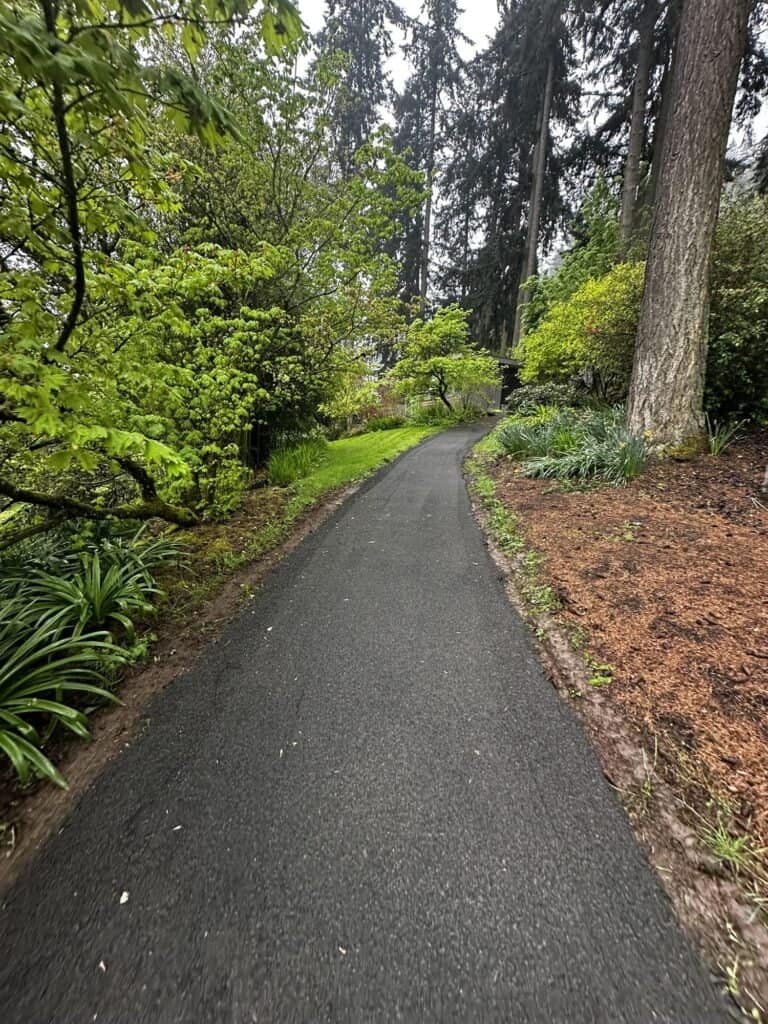
The Result
We checked on the path a few months later, during the drier months, and it had performed very well. All of the soft spots had firmed up completely, and the client was very pleased with the result.
Why 1/4" Minus?
For a gravel surface that compacts very firmly, 1/4" minus crushed basalt is an excellent option. The small crushed rock and fines lock together and pack down tightly, which makes it well suited to walking paths.
Materials Used
1/4" minus crushed basalt, about 6 to 8 inches deep on average and over a foot thick in low spots, compacted with a roller. The boulder edging was installed afterward by the client's landscapers.
What a Project Like This Costs
Typical range
Under $5,000
Gravel walking paths like this one, built with compacted 1/4" minus around a home, usually fall in this range.
What affects the cost
Every property is different, so the cost of similar projects can vary. The main factors are:
- Path length and width. Longer and wider paths take more rock and more time.
- Depth of rock. Soft or low spots may need a thicker layer to build up.
- Haul distance. The distance between the quarry supplying the material and the job site.
- Material pricing. Rock prices vary by quarry and by material type.
- Site access. Tight side yards, landscaping and slopes can limit equipment and slow the work.
Planning a similar project? We're happy to talk through what you have in mind and give you a free estimate.
Common Questions
What is the best gravel for a walking path?
1/4" minus crushed basalt is a great choice. The small crushed rock and fines pack down into a very hard, smooth surface that's comfortable to walk on and stays in place.
Does a gravel walking path need base rock?
Usually not. A walking path doesn't carry vehicle weight like a driveway, so a thick layer of compacted 1/4" minus is often enough, even over a few soft spots.
Will soft spots in a new gravel path firm up?
Often, yes. On this path, the soft spots from installing during the wet months fully hardened once the drier weather came.
Planning Something Similar?
See our 1/4" minus, Portland gravel delivery and Northwest Portland land services, or request an estimate and we'll take a look at your property.
← All success stories