
A yard that stays soggy all winter, a crawl space that keeps getting wet, or ground so lumpy you can barely mow it are all signs that the grading is off.
The good news is that grading problems can usually be fixed without tearing up your whole property. In many cases, reshaping the ground is the simplest and most effective way to solve them.
Grading is the process of reshaping the ground so water goes where it should and the surface is ready for whatever comes next, whether that’s a new lawn, a garden, or a patio. At M4 Landworks, we approach yard grading in four general steps: clearing the area, rough grading, finish grading, and getting the ground ready for grass or landscaping.
Why Does Yard Grading Matter?
Good grading does two jobs at once:
Ground that slopes toward the house sends rain toward the foundation. Grading the area so it slopes away keeps water from collecting next to your home.
A smooth, even yard is easier to mow, safer to walk on, and gives grass seed or sod a much better start.
In Northwest Oregon, where most of the year’s rain falls between fall and spring, a yard that drains poorly can stay wet for months. Fixing the grade is often the simplest way to solve it.

What Does the Yard Grading Process Look Like?
Every yard is a little different, but most grading projects follow the same general process.
Step 1: Clearing the Area
First, we remove unwanted vegetation, old landscaping, and surface debris so the ground can be reshaped.
On overgrown properties, this may start with brush and land clearing before any grading begins.
Step 2: Rough Grading
Rough grading sets the overall shape of the yard.
We move soil from high spots to low spots, establish slopes so water drains away from the house and toward a safe place, and correct problem areas along the way.
If the yard needs more soil than it has, material may be brought in. If there’s too much, it may be hauled away.
Step 3: Finish Grading
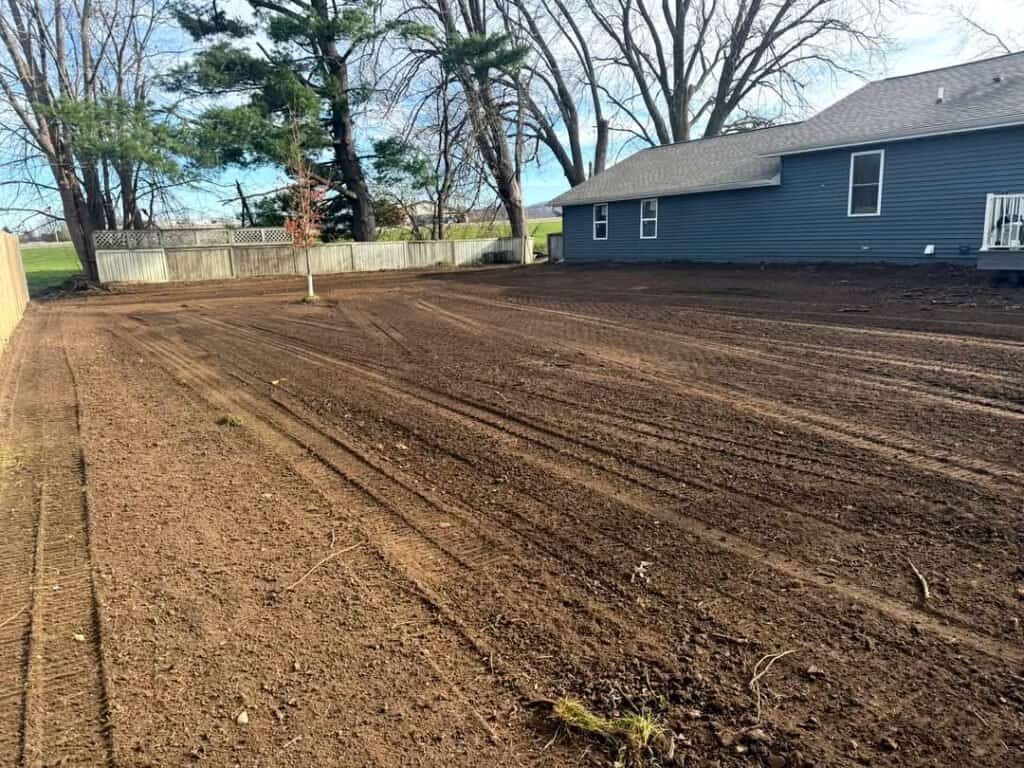
Finish grading is what makes a yard look and feel finished.
We break up and rework the existing soil so the surface is smooth and even, free of ruts and clumps, and then fine-tune the final slopes. The goal is a surface that drains properly and is ready for the next phase of landscaping.

Step 4: Getting Ready for Grass or Landscaping
Once the grade is set, the ground is ready for whatever comes next.
Optional add-on
Grass Seeding and Straw
Depending on what you want and the agreed scope of work, grass seeding and straw can be included in your yard grading project.
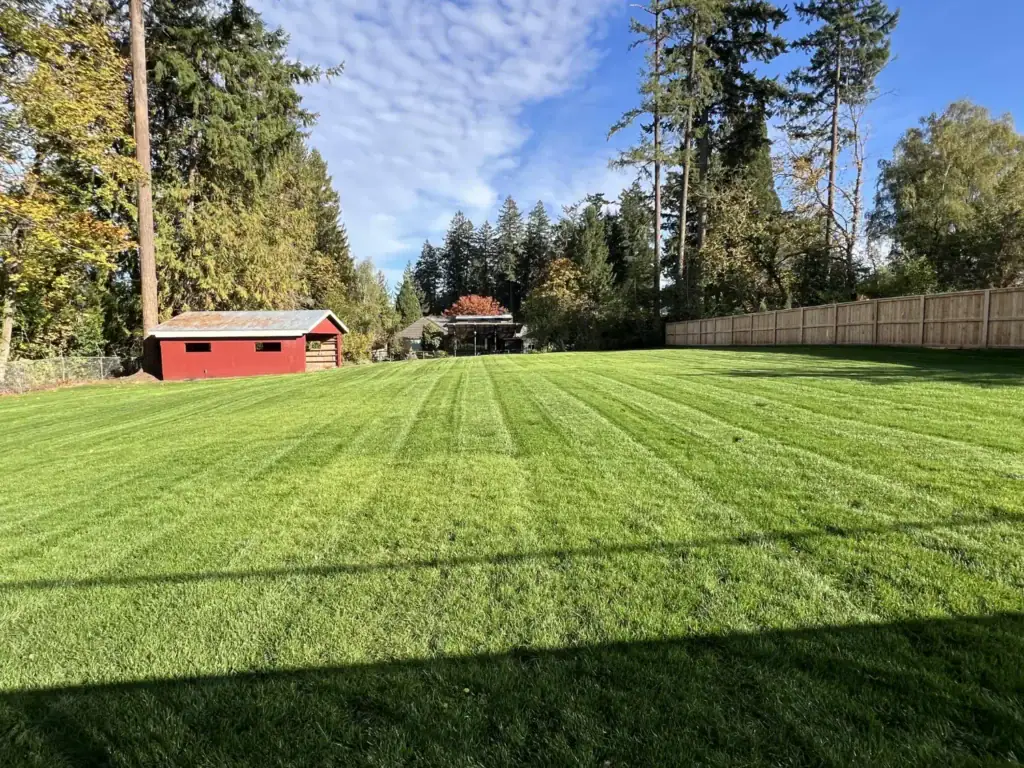
It’s a simple way to go from a rough, uneven yard to a fresh start on a new lawn in one project.
Is Grading Enough, or Do You Need a Drain?
Grading handles surface water, the rain that runs across the ground. It works well when there’s a place for that water to go, such as a lower part of the property or a ditch.
But grading can’t fix every wet yard. If water is coming from below, the ground stays saturated, or there’s simply nowhere for surface water to drain, a drainage system may be needed along with grading.
Water runs across the surface and there’s a lower, safe place for it to go. Reshaping the ground is usually enough.
The ground stays saturated, water comes from below, or there’s nowhere for surface water to drain. A drain or swale may be needed too.
Our post on French drains vs. swales vs. dry creek beds explains the drainage options and when each one makes sense.
How Much Does Yard Grading Cost?
Yard grading costs depend mostly on the size of the area and how much the ground needs to be reshaped. Here’s what typical M4 Landworks projects look like:
Typical project pricing
Yard grading and lawn preparation covers smoothing rough yards and preparing ground for grass seed or landscaping. Property grading and leveling covers larger projects with uneven terrain, soil movement, or changes in elevation.
Within those ranges, the biggest factors are:
- Size of the area being graded.
- Terrain and how much the ground needs to be reshaped.
- Existing soil conditions.
- Site access for equipment.
- Soil that needs to be brought in or hauled away.
These ranges represent typical projects, not fixed prices. Every yard is different, so the final price comes from a property walkthrough and a written quote. You can explore our typical project pricing to see more.
Frequently Asked Questions
The ground next to a house should slope away so water drains away from the foundation instead of toward it. The exact slope depends on the site, local requirements, and how far the water has to travel to a safe place to drain.
Rough grading sets the overall shape of the ground, moving soil from high spots to low spots and establishing slopes. Finish grading smooths and fine-tunes the surface so it’s ready for seed, sod, or landscaping.
Late spring through early fall is best for most grading work, when the soil is dry enough to shape properly. Grading wet soil tends to compact it and leave ruts. Early fall also works well if you plan to seed a new lawn.
Grading fixes many wet yards by moving surface water away. If the ground stays saturated from water underneath, or there’s nowhere for the water to go, a drainage system may also be needed.
Free estimates
Ready to Fix a Wet or Uneven Yard?
Whether you’re dealing with standing water, a lumpy lawn, or a yard you’d like to get ready for new grass, the best place to start is a look at how the ground sits and where the water wants to go.
At M4 Landworks, we provide yard grading, property leveling, and drainage services throughout Columbia County, portions of Washington County, and Northwest Portland.
Take a look at our land grading and drainage solutions pages, or request a free estimate. We’ll look at your yard, talk through your options, and help determine the approach that makes the most sense for your property.