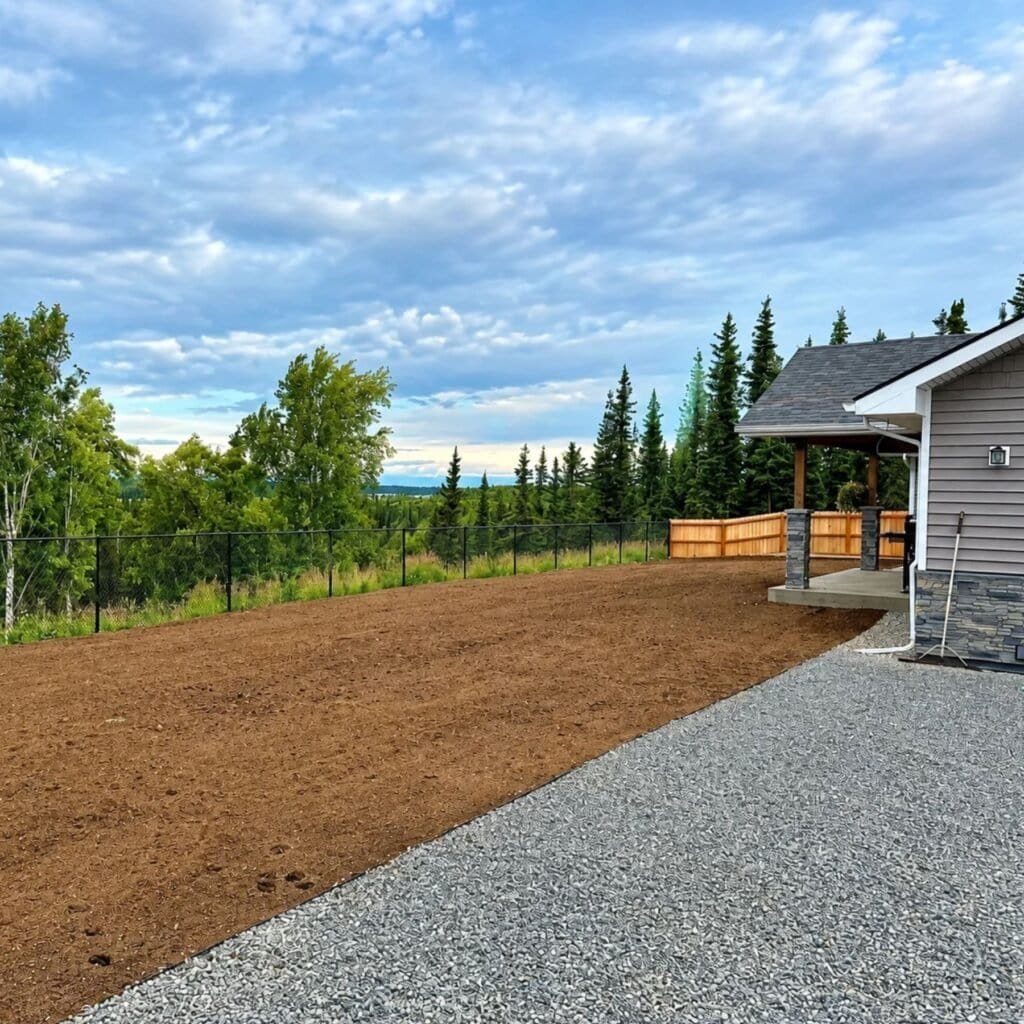

The Problem
This driveway had been eroding for a long time. By the time the clients called us, it was worn down past the clay, with almost no rock material left.
It's an extremely steep driveway, with about an 18% grade, and it runs about 2,000 feet. It's also a shared driveway. The clients were getting to the point where they could no longer get up it.
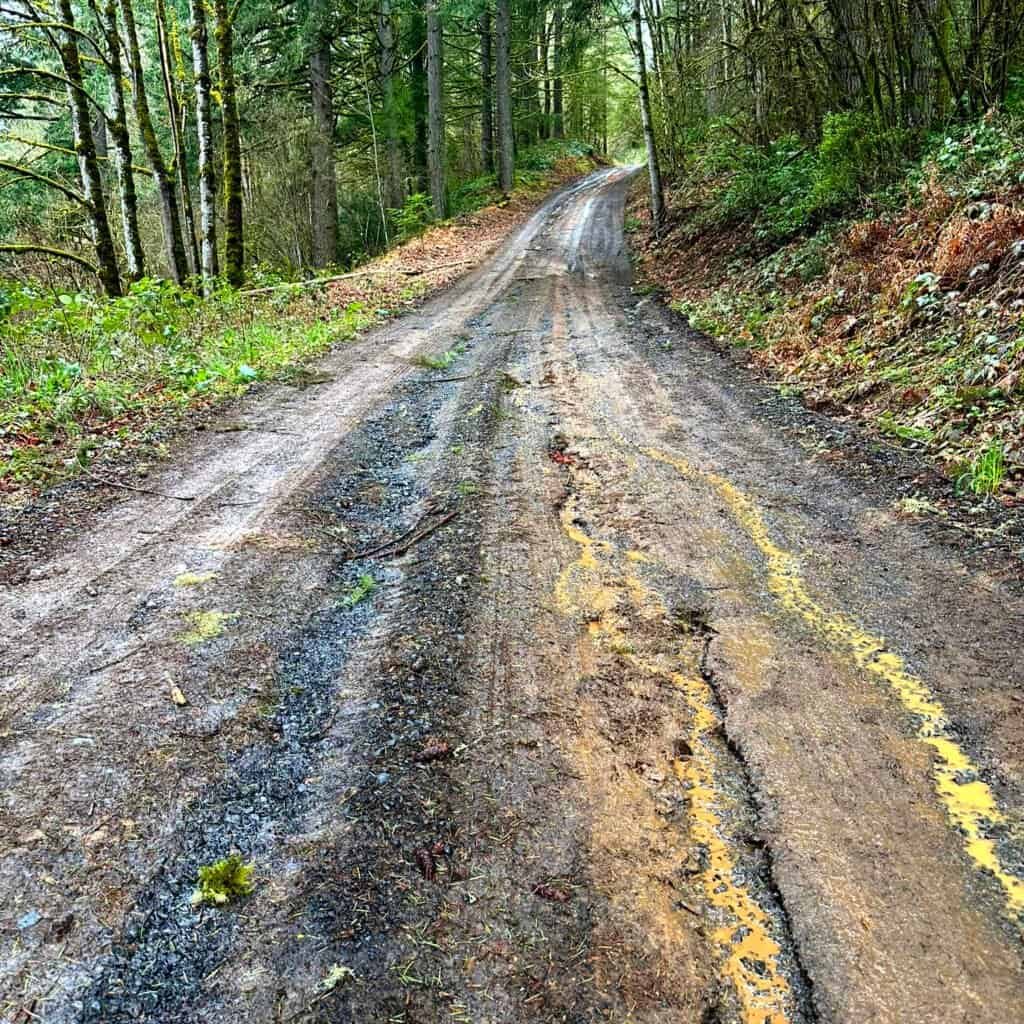 Before
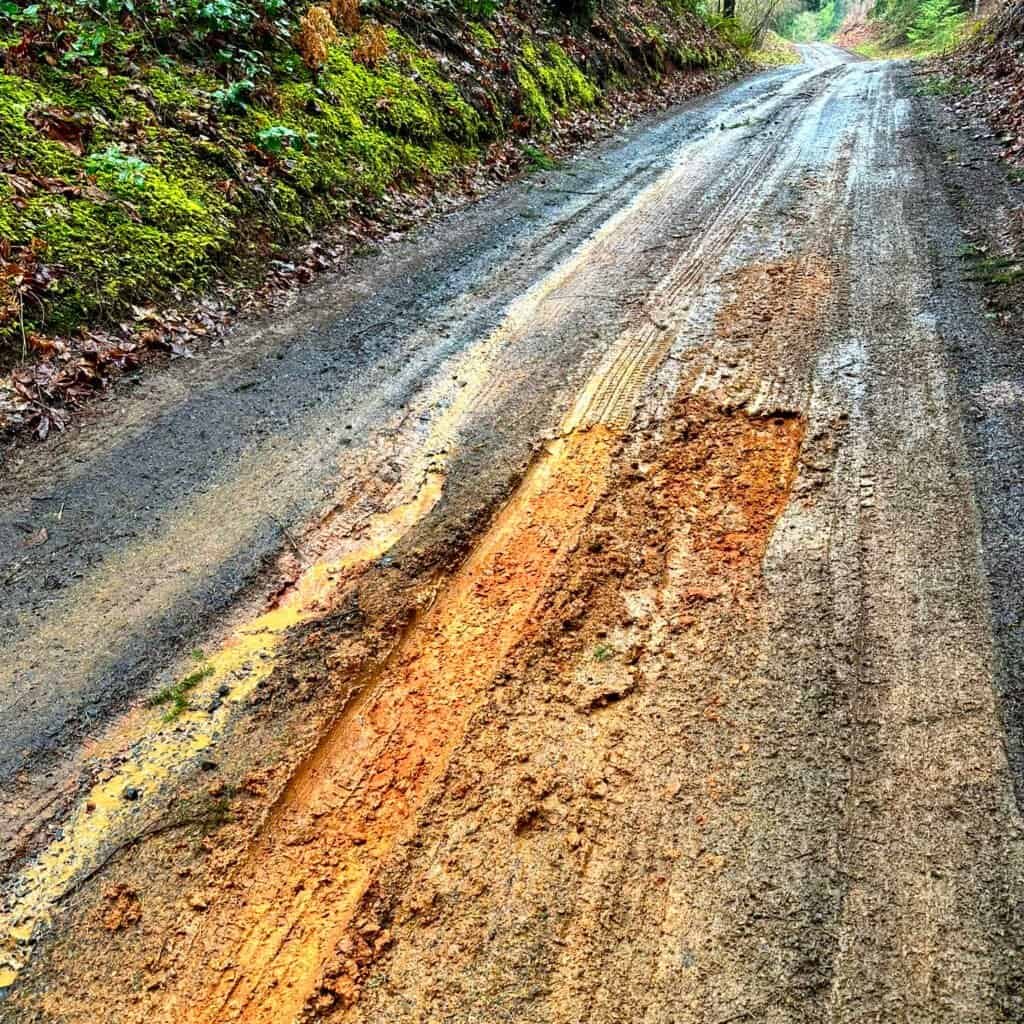 Before
Prepping the Base
We started by prepping the base as much as we could, working any existing rock back up to the surface.
Some areas had no rock left at all. We made the best of what was there, smoothed everything out and got the whole driveway ready for new aggregate.


Building a Solid Base With 3" Rock
On a driveway this steep, the base is everything. We started with 3" base rock to build a solid foundation.
We installed, compacted and graded about 10 inches of base rock. Large base rock locks together and spreads the weight of vehicles, which is what keeps a steep driveway from breaking down under heavy loads.

Topping It With 3/4" Minus
Then we topped everything with about 6 inches of 3/4" minus over the entire driveway.
3/4" minus has a mix of rock sizes and fines, so it compacts into a tight, smooth surface that's easy to drive on, even on a steep grade.
Raising the Surface to Shed Water
There are no ditches on either side of this section of driveway. The way it was cut in, with large trees right along the edge and utilities to work around, ditches could be added, but it's an extensive amount of work and it wasn't in the budget.
So we raised the entire surface of the driveway. Building it up above the ground on either side creates natural ditches along the edges, so water can roll off to the sides.
Is it a perfect solution? No. Is it much better than water running right down the middle of the driveway? Yes.
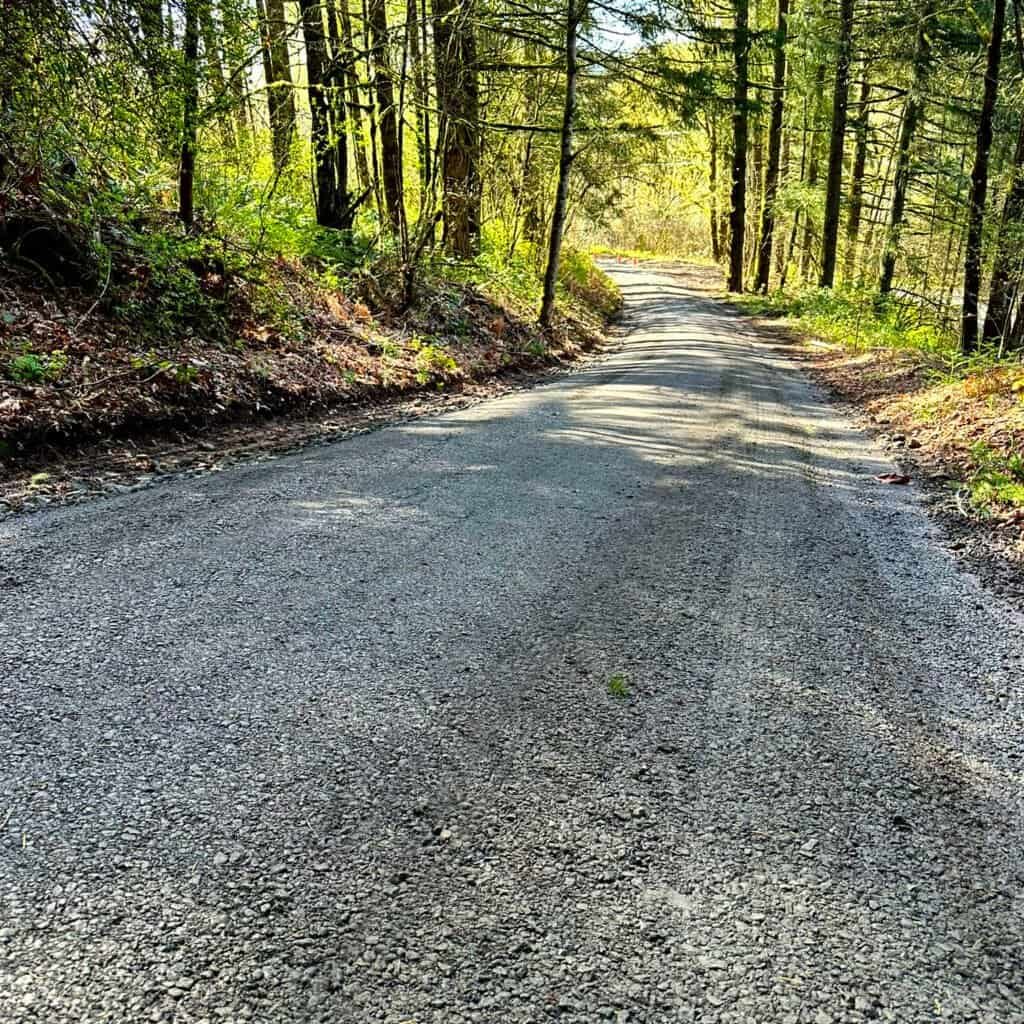
The Result
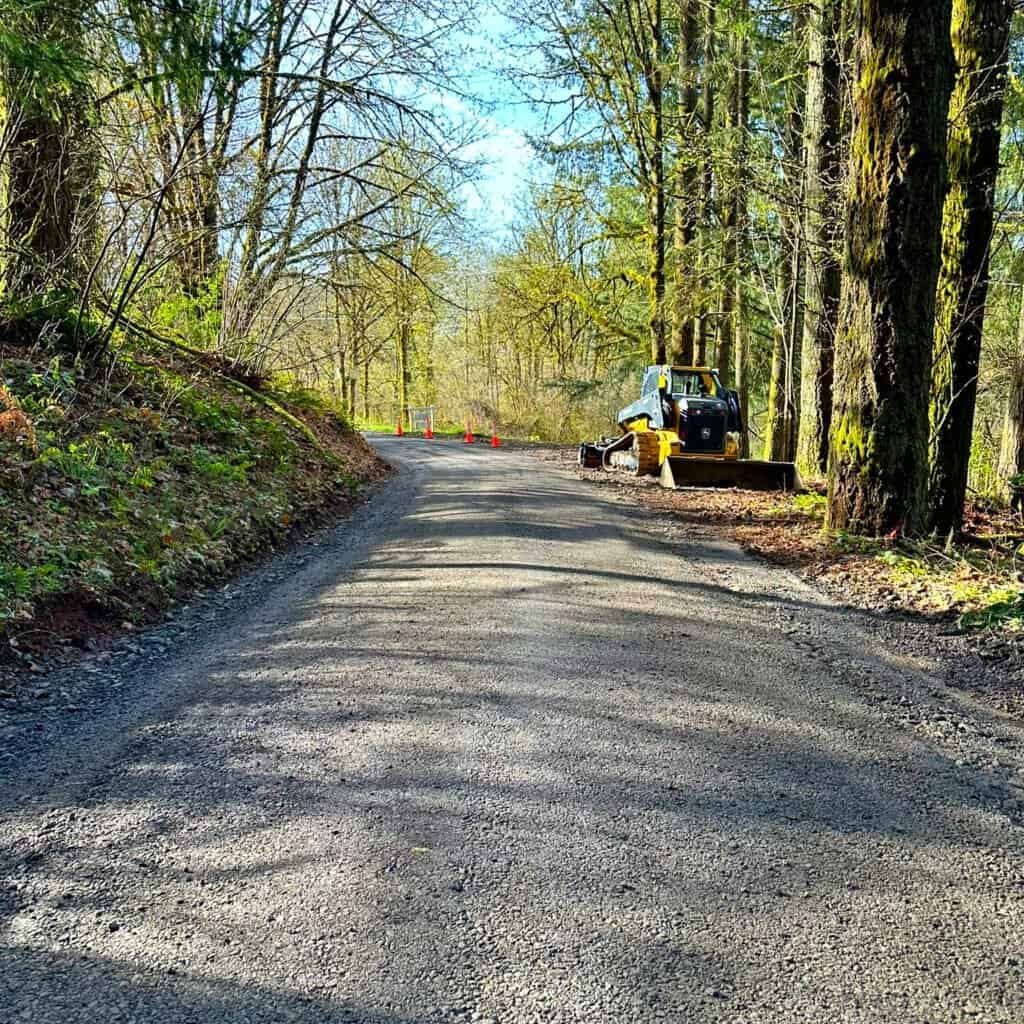
The clients were extremely happy. They can now get their horse trailer up and down the driveway with ease.
We still come back every year to maintain it and keep it in good shape.
 After
 After
A Tip for Steep Driveways: Keep Delivery Traffic Off
One of the biggest things that damages driveways like this, especially steep ones, is delivery traffic. Heavy vans braking and accelerating on a steep grade wear the surface down quickly.
If you can keep delivery vehicles off your driveway, it makes a real difference. A drop box at the bottom of the driveway for packages is a little inconvenient, but it will save your driveway a lot of wear and tear and save you money on repairs down the road.
Materials Used
About 10 inches of 3" base rock, compacted and graded, topped with about 6 inches of 3/4" minus over the entire driveway.
What a Project Like This Costs
Typical range
$10,000 – $20,000
A full rebuild of a long, steep gravel driveway like this one usually falls in this range.
What affects the cost
Every property is different, so the cost of similar projects can vary. The main factors are:
- Haul distance. The distance between the quarry supplying the rock and the job site.
- Material pricing. Base rock and 3/4" minus prices vary by quarry.
- Project size and depth. Longer driveways and deeper rock take more material and time.
- Site access. Steep grades, trees and utilities along the edges take more care.
- Site preparation. How much work the existing base needs before new rock goes down.
- Ground conditions. Soft or clay soils can call for a thicker base.
Planning a similar project? We're happy to talk through what you have in mind and give you a free estimate.
Common Questions
Why do steep gravel driveways wash out?
Water picks up speed on a steep grade. Without ditches or a raised surface to move it off to the sides, it runs straight down the middle and carries the fine material with it, until the soil underneath is exposed.
What rock works best on a steep driveway?
We like a heavy base of 3" rock for strength, topped with 3/4" minus for a tight, smooth driving surface. On this driveway, we installed about 10 inches of base rock and about 6 inches of 3/4" minus.
What can you do if a driveway has no room for ditches?
Raising the driveway surface above the ground on either side creates natural ditches along the edges, so water can roll off to the sides instead of running down the middle. It isn't as effective as true ditches, but it's a big improvement.
How can I make a gravel driveway last longer?
Keep up with regular maintenance, and keep heavy delivery traffic off the driveway if you can. A package drop box at the bottom of the driveway saves a lot of wear and tear.
Planning Something Similar?
See our St. Helens gravel driveway repair and gravel driveway services, read Regrade, Resurface, or Rebuild?, see another driveway erosion repair in St. Helens, or request an estimate and we'll take a look at your property.
← All success stories