
Preparing Land for a Manufactured Home: What to Expect

Preparing land for a manufactured home usually means getting permits and a site plan, clearing the site, building a firm driveway the delivery truck can use, grading a level pad that drains away from the home and trenching for utilities. Licensed trades make the final utility connections, and the ground is final graded after setup.
When Is the Best Time of Year for Excavation and Grading in Oregon?

In Northwest Oregon, late spring through early fall is the best time for most excavation and grading, because dry ground compacts properly and equipment does not rut the site. The wet season is better for watching drainage problems, planning, some clearing and urgent repairs. Book dry-season work in late winter or early spring.
What Goes Into a Pole Barn or Shop Building Pad

A good pole barn or shop pad starts on high, well-drained ground. The area is cleared and stripped of topsoil, graded so water flows away, then built up with crushed base rock compacted in thin layers and topped with 3/4″ minus. The pad should be larger than the building and level before the builder arrives.
What a Driveway Culvert Does and the Signs Yours Is Failing

A driveway culvert is a pipe that lets ditch water pass under your driveway instead of over it. Signs it is failing include water pooling on the uphill side, water running over the driveway, a dip or sinkhole above the pipe, crushed or rusted ends and a pipe full of sediment. Clearing both ends each fall prevents most problems.
Getting Your Gravel Driveway Ready for an Oregon Winter: A Fall Checklist

Before the rain settles in each fall, clear your ditches and culverts, patch potholes, restore the driveway crown so water runs off, top up thin spots with crushed rock, redirect downspouts and trim overhanging branches. Save major regrading for late spring, when the ground is dry enough to work.
Why Blackberries Keep Coming Back in Oregon (and How to Clear Them for Good)

Himalayan blackberries come back because they regrow from root crowns, root where cane tips touch the ground and spread by seed. Cutting or mowing alone only sets them back. Lasting removal means cutting the canes, removing the root crowns and then pulling new shoots for one to two seasons while the cleared ground is planted or kept mowed.
French Drain vs. Swale vs. Dry Creek Bed: Which Fixes Your Wet Yard?
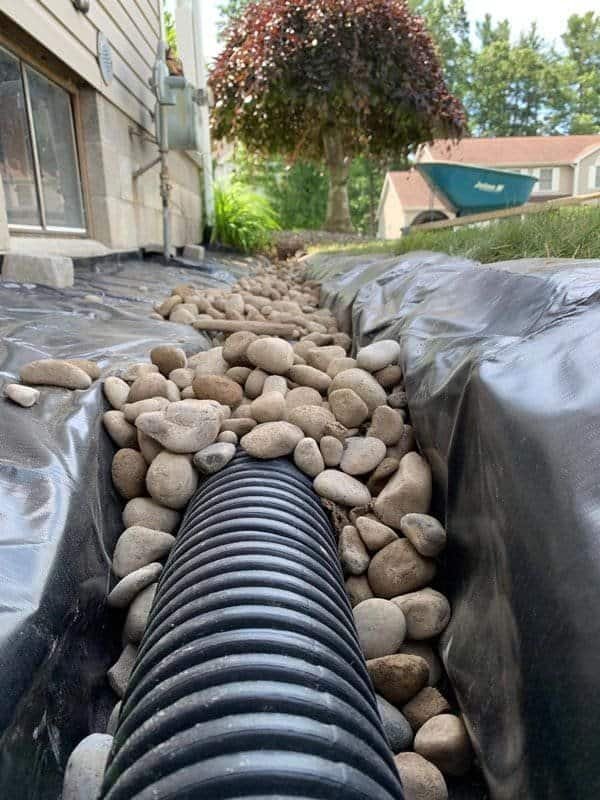
A French drain collects water that is already in the soil and carries it away through a buried perforated pipe. A swale is a shallow surface channel that guides runoff you can see moving across the ground. A dry creek bed is a rock-lined swale that also works as a landscape feature. Choose based on whether your water is in the ground or on the surface.
How Much Gravel Do I Need? A Simple Way to Estimate Yards and Tons

Multiply length × width × depth in feet, then divide by 27 to get cubic yards. Crushed rock weighs roughly 1.4 tons per cubic yard, so multiply by about 1.4 to estimate tons. Add 10 to 15 percent extra to allow for compaction and uneven ground.
3/4-Inch Minus vs. 1-1/2-Inch Minus vs. Pea Gravel: Which Rock Goes Where?

Use crushed “minus” rock, like 3/4″ minus, anywhere vehicles drive, because its fines let it compact into a firm surface. Use larger 1-1/2″ or 3″ minus as a base on soft ground. Save pea gravel for paths and play areas, and use clean drain rock, which has no fines, wherever water needs to pass through.
Why Gravel Driveways Get Potholes (and How to Stop Them for Good)

Potholes in a gravel driveway are almost always caused by water. When the surface is flat or dished instead of crowned, rain sits in low spots, softens the base and washes out the fine material that holds the rock together. The lasting fix is to reshape the driveway so water runs off, give that water somewhere to drain and compact a crushed rock surface.