
The Project
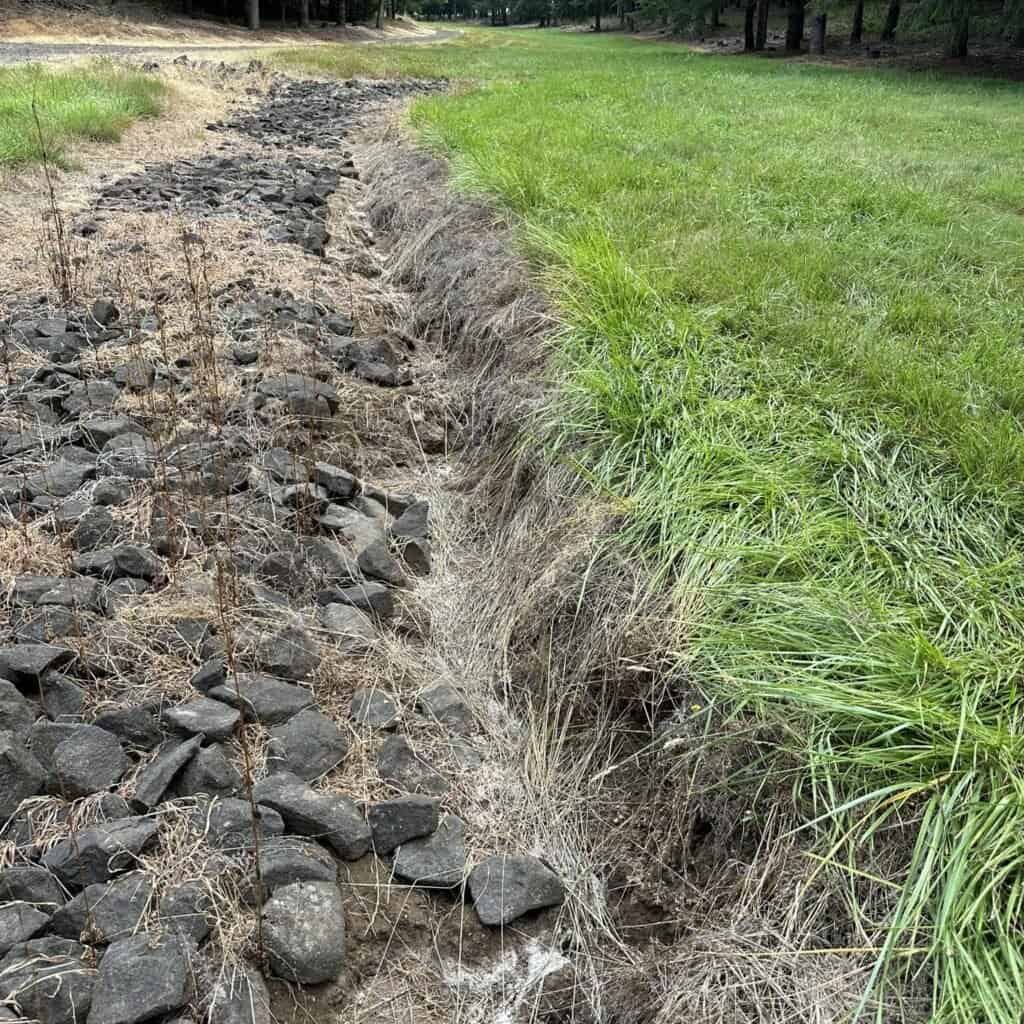
This drainage swale was about 20 years old and in need of restoration. Its edges had eroded and were caving into the channel.
 Before
Sloping Back the Edges
We sloped back all of the soil edges and removed the loose debris. The excavated soil was placed elsewhere on the property, so nothing needed to be hauled away.
Lining It with Riprap
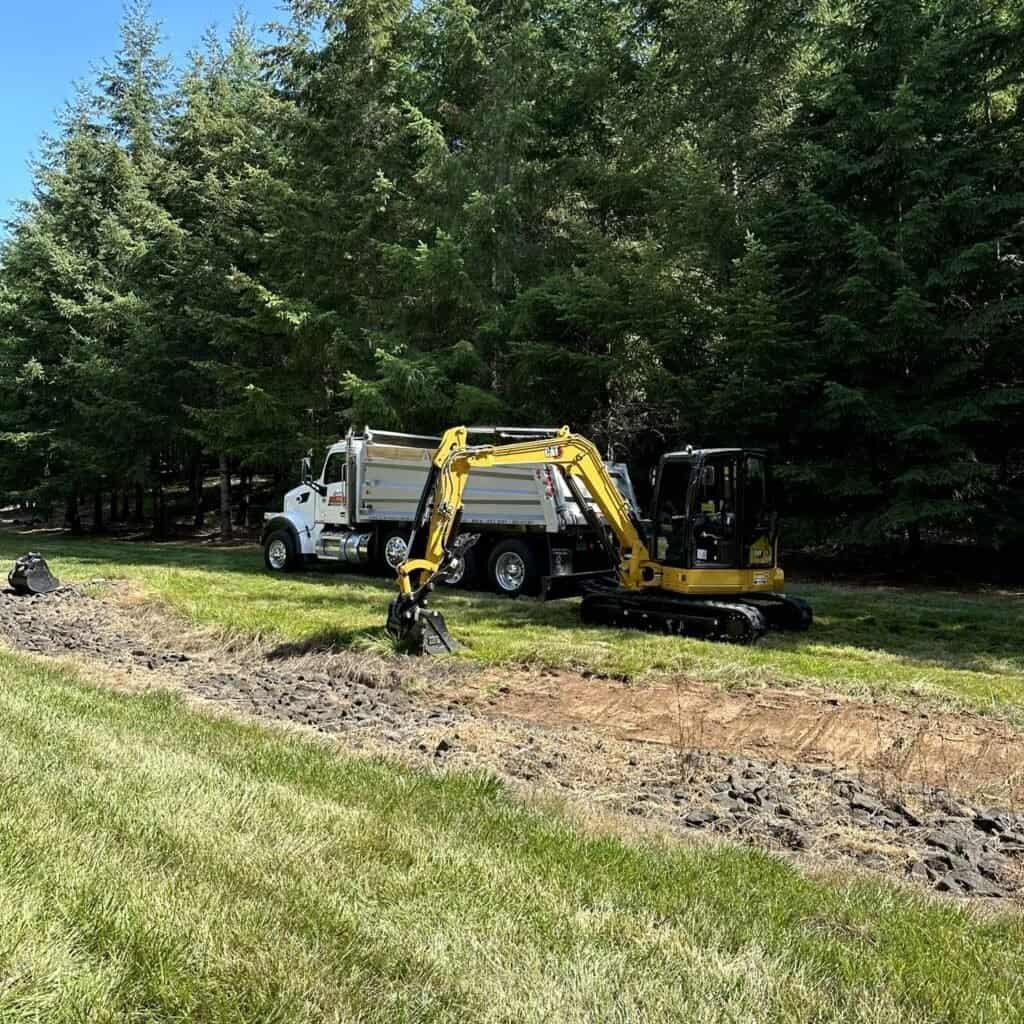
We then brought in several truckloads of 2 to 8 inch riprap and lined the entire swale, including the newly shaped edges, to prevent future erosion.
The Result
The swale is functioning as intended, and the clients are very pleased with the result.
Materials Used
Several truckloads of 2 to 8 inch riprap, lining the full swale and its edges.
What a Project Like This Costs
Typical range
Under $5,000
Swale repairs like this one, with the edges sloped back and the swale lined with riprap, usually fall in this range.
What affects the cost
Every property is different, so the cost of similar projects can vary. The main factors are:
- Swale length and width. The size of the swale determines how much rock it takes to line it.
- Condition of the edges. How much erosion needs to be sloped back and cleaned out first.
- Haul distance. The distance between the quarry supplying the rock and the job site.
- Material pricing. Rock prices vary by quarry and by material type.
- Site access. Trees, slopes and soft ground can limit equipment and truck access.
Planning a similar project? We're happy to talk through what you have in mind and give you a free estimate.
Common Questions
Why do the edges of a drainage swale erode?
Water running through the swale wears away bare soil along the edges over time. The soil starts caving in, which narrows the channel and adds loose material to the swale.
What size rock is best for lining a drainage swale?
We used 2 to 8 inch riprap. The large, angular rock locks together and holds up against moving water, protecting the soil underneath.
How do you repair an eroded drainage swale?
Slope back the eroded edges, pull out the loose debris, then line the swale and the fresh edges with riprap so the soil is protected from future erosion.
Planning Something Similar?
See our drainage solutions, Banks excavation, our guide to French drains vs. swales vs. dry creek beds and our 2 to 8 inch riprap, or request an estimate and we'll take a look at your property.
← All success stories