
The Problem
When this family bought the farm, it had been badly neglected. They have been steadily restoring it, and today it is a fully working mini farm.
Two problems remained: mud and debris around the barn, and a long driveway, about 600 feet, full of potholes. They asked us to address both.
 Before
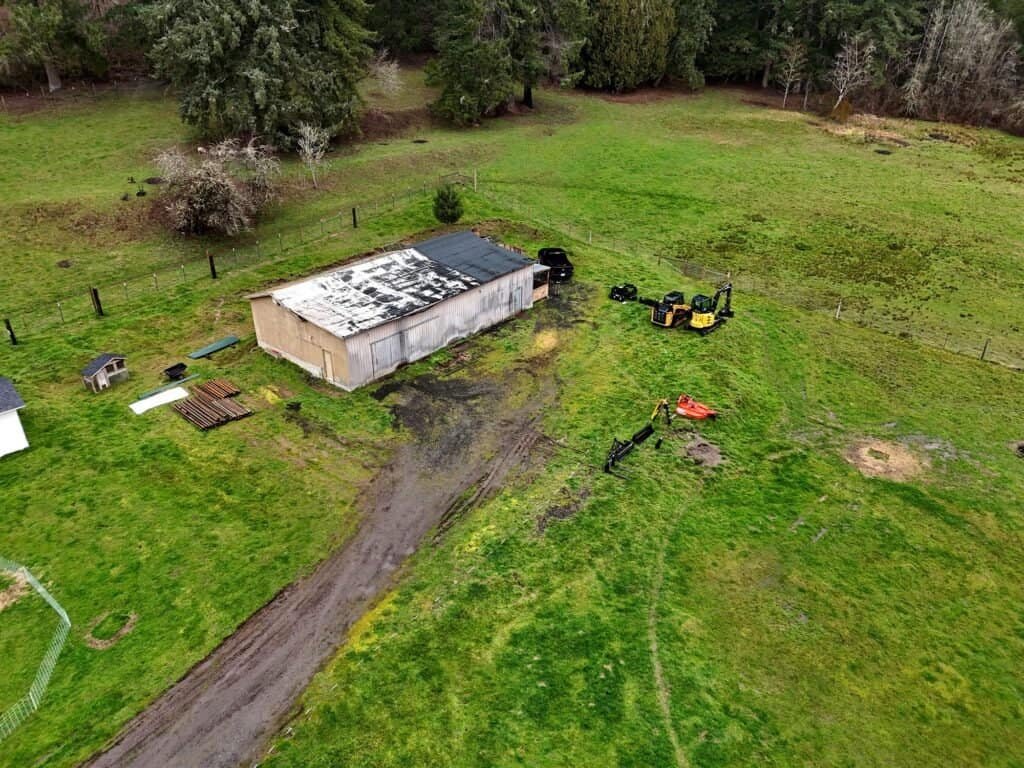 Before
Cutting Out the Potholes
We started on the driveway by cutting out every pothole and failed section and preparing the base for new gravel. Filling a pothole with fresh rock only covers it temporarily. Cutting the defects out gives the new gravel solid, even ground to sit on. (Learn more about why gravel driveways get potholes.)
Clearing the Barn and Parking Area
Around the barn and parking area, we stripped off the grass, debris and mix of old rock, leaving a clean, firm surface for the new gravel.
Building the Base
In areas where the subsoil was soft, we placed 3" minus as a base. The larger rock spreads the load and keeps the surface from sinking into soft ground. We then covered the entire project, including the driveway, barn area and parking, with a thick layer of 3/4" minus, averaging about 10 inches deep.
 After
Raising and Crowning for Drainage
We raised all of the gravel surfaces so water flows away from them rather than toward them. The driveway was also crowned down the middle so rain sheds off both sides instead of collecting on top. Standing water softens the base of a gravel surface, especially a driveway, and that is how potholes and soft spots form.
We kept clean lines throughout and compacted the rock into a firm, even surface. The project took about a week, and we continued working through a heavy rainstorm to complete it.
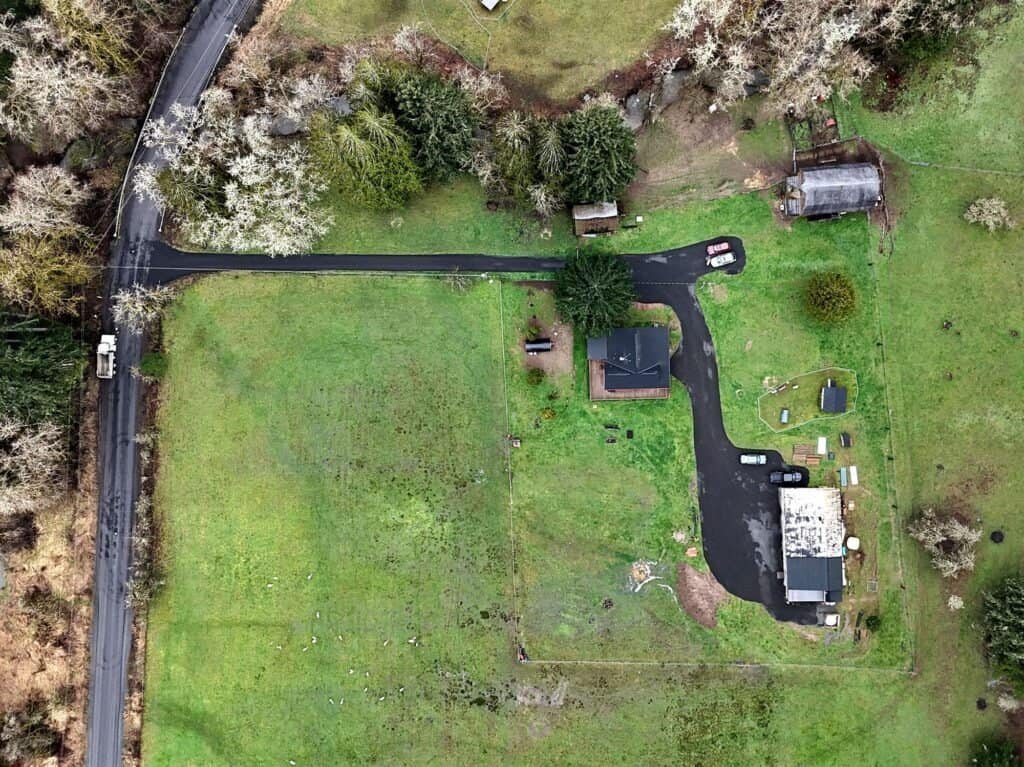 After
 After
The Result
The mud around the barn and the potholes in the driveway are gone, and the family has more usable space for parking and daily farm work. The new gravel also transformed the look of the property. The farm now looks as well cared for as it is.
Curtis worked all week through a pretty bad rainstorm and the work he did is perfect. We are already seeing the results and we couldn't be happier with it. He responds to messages and phone calls and shows up when he says he will.
 After
Materials Used
3" minus base rock in soft areas, and a thick layer of 3/4" minus gravel over the entire project, about 10 inches deep on average, raised and crowned for runoff and compacted.
What a Project Like This Costs
Typical range
$10,000 – $25,000
Gravel driveway and barn area projects like this one, with about 600 feet of driveway, pothole repair, a rebuilt base in soft spots and a thick layer of 3/4" minus, usually fall in this range.
What affects the cost
Every property is different, so the cost of similar projects can vary. The main factors are:
- Haul distance. The distance between the quarry supplying the material and the job site.
- Material pricing. Rock prices vary by quarry and by material type.
- Project size and depth. The length of the driveway, the size of the area and the depth of rock required determine the total amount of material.
- Site access. Narrow entrances, slopes or soft ground can require smaller loads or additional trips.
- Site preparation. Pothole repair, stripping grass and existing rock, or grading before the new gravel is placed.
- Ground conditions. Soft or wet subsoil may require a thicker base layer.
Planning a similar project? We're happy to talk through what you have in mind and give you a free estimate.
Common Questions
How do you fix potholes in a gravel driveway for good?
Cut out the potholes and soft spots, rebuild the base where the ground is weak, then regrade so water runs off instead of pooling, and compact a fresh layer of crushed rock. Filling potholes with loose rock alone doesn't last.
Why should a gravel driveway be crowned?
A crown makes the middle of the driveway slightly higher than the edges, so rain sheds off to the sides instead of sitting on the surface. Standing water softens the base, and that's what turns into potholes and soft spots.
When do you need 3-inch minus under a driveway?
When the subsoil is soft. The larger rock makes a stronger base that spreads the load, so the top layer of 3/4" minus doesn't push down into the soft ground.
Why strip grass and old rock before adding new gravel?
Grass, roots and loose old rock break down and hold water. Removing them lets the new gravel sit on firm ground and compact properly, so it stays solid instead of turning back into mud.
Planning Something Similar?
See our Rainier gravel driveway repair, gravel driveway services and Rainier gravel delivery, or request an estimate and we'll take a look at your property.
← All success stories