The Problem
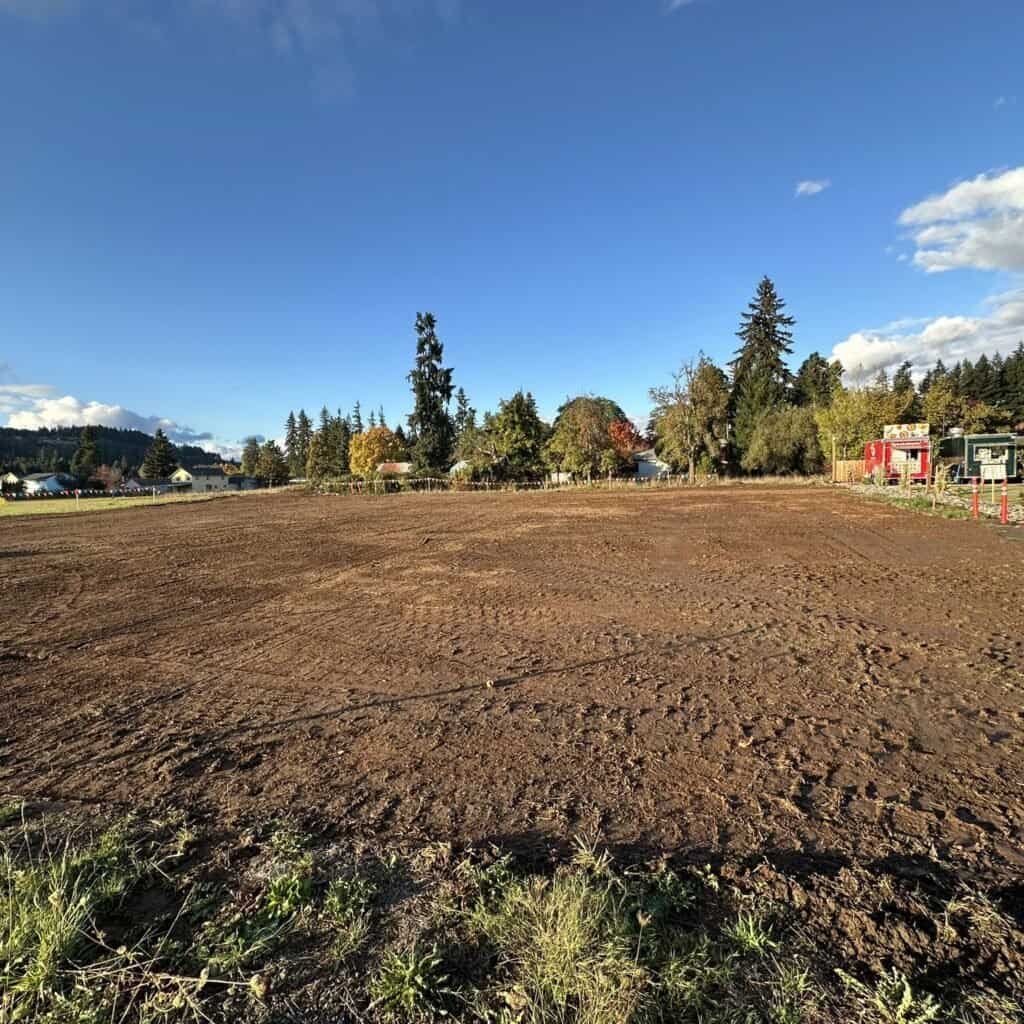
The Lodge Carts is a popular food cart lodge in Scappoose, and business was growing. Customers had been parking in an open field next to the lodge, and large holes were forming across it, creating a hazard for both pedestrians and vehicles.
The owners knew what to expect: every rainy season, the field turned to mud. They needed solid, year-round parking, along with a large open area for vendor events during the summer.
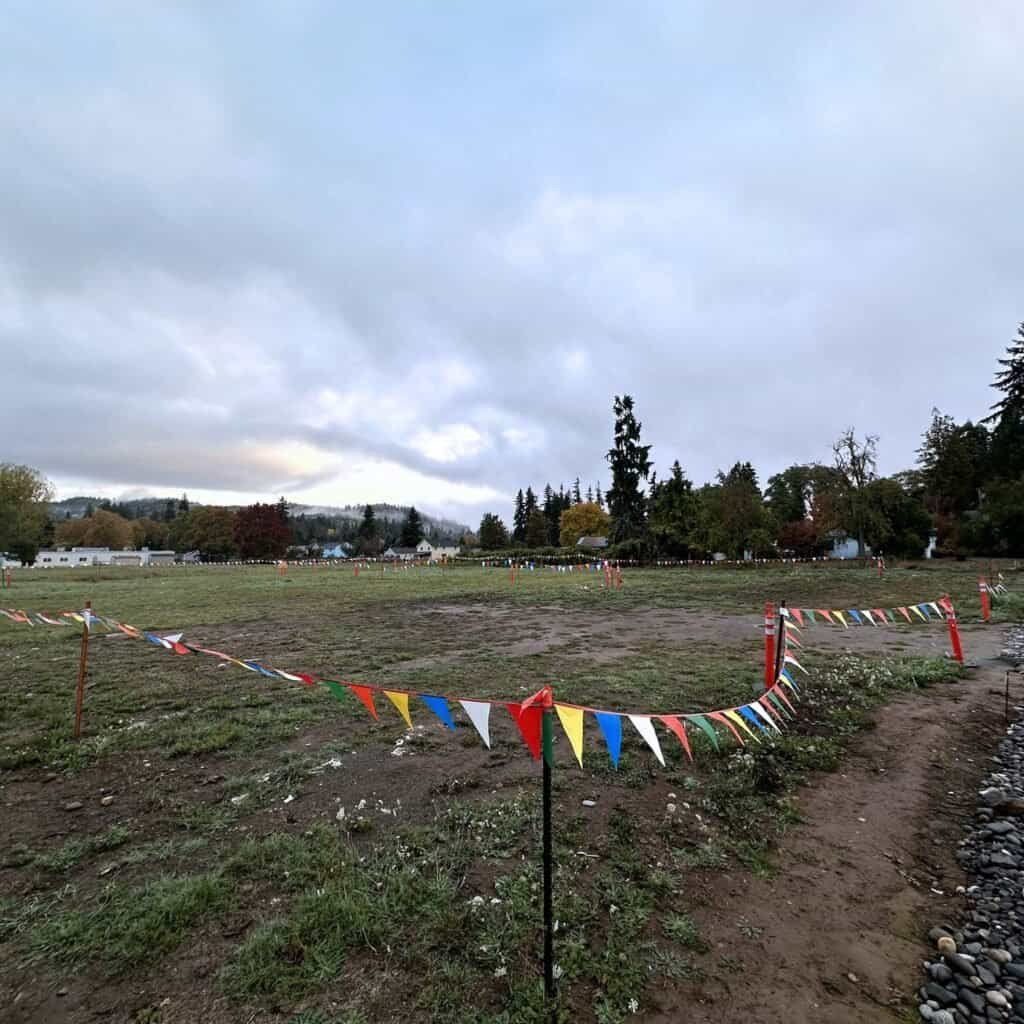 Before
A Tight Timeline
The Lodge needed the space ready before the ground became too wet to work, and rain was already in the forecast. We rearranged our schedule to build the base and finish the lot before the weather turned.
Stripping the Topsoil
We began by stripping the existing topsoil across the entire area and preparing the ground for new rock. Topsoil is soft and holds water. Left in place under the gravel, it would eventually lead to ruts, soft spots and mud working its way back to the surface.
Once the topsoil was removed, we found rock rather than clay. Clay holds water and softens, while a rock layer provided a firm, stable foundation for the new lot.
Building the Base
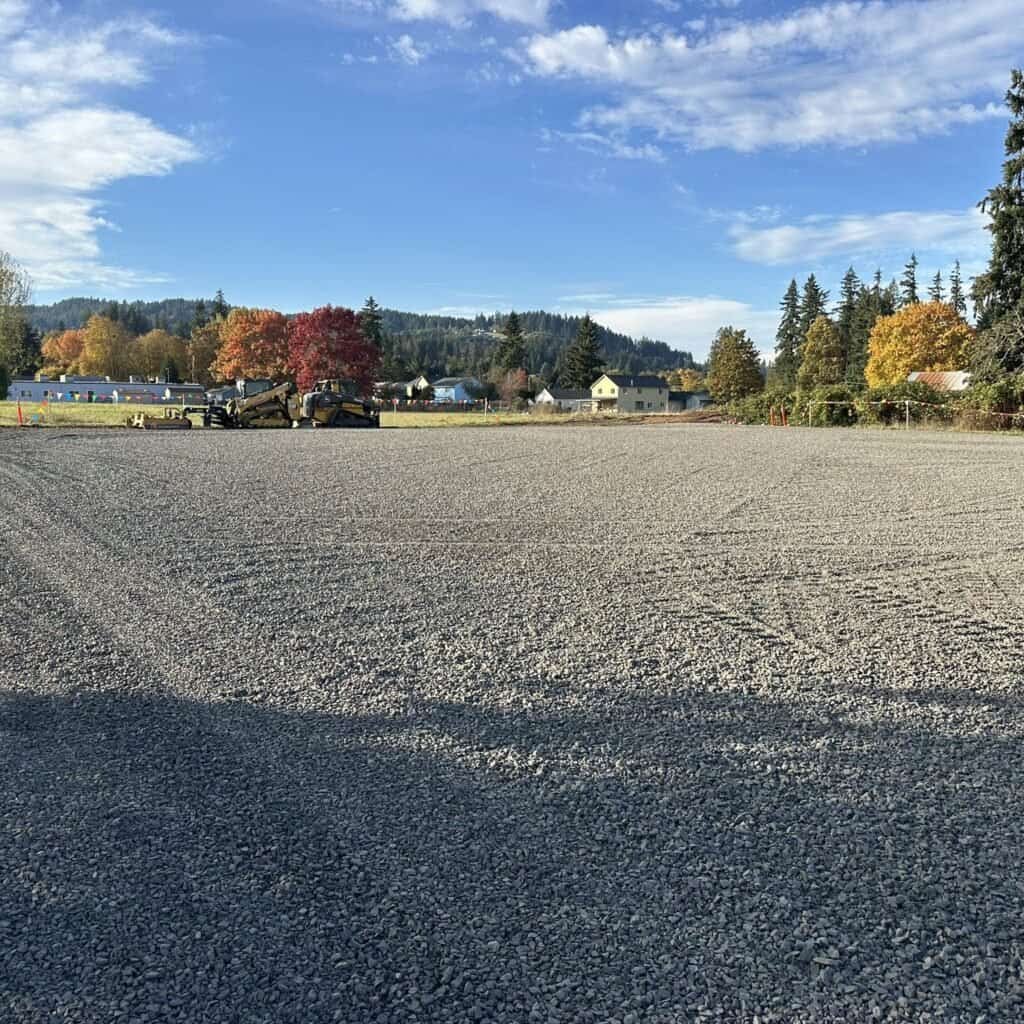
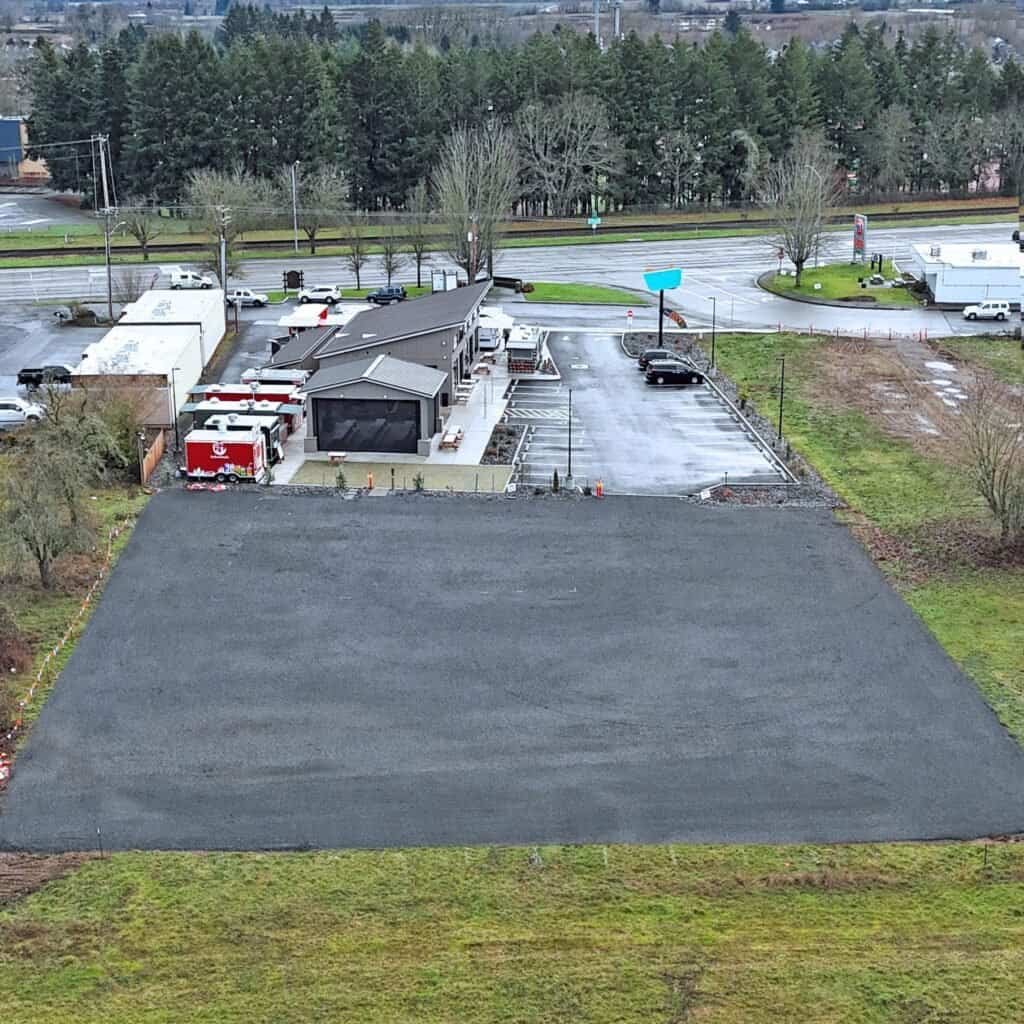
On that foundation, we placed a base layer of 1-1/2" minus rock, followed by a thick layer of 3/4" minus gravel. In total, about 15 inches of rock was installed across the 22,500 sq ft area.
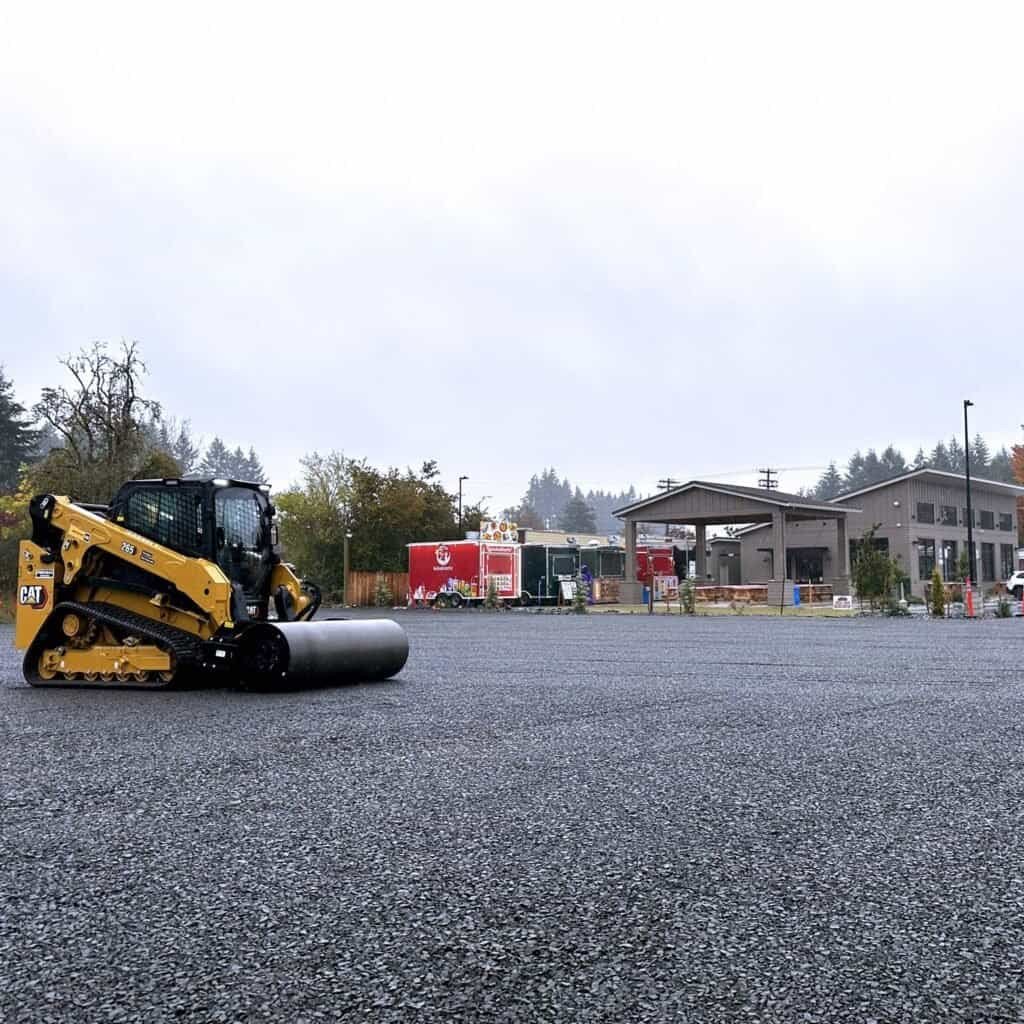
Each layer was graded and compacted to a solid, even finish, giving the Lodge a surface built to handle daily parking, delivery vehicles and event crowds.
The Result
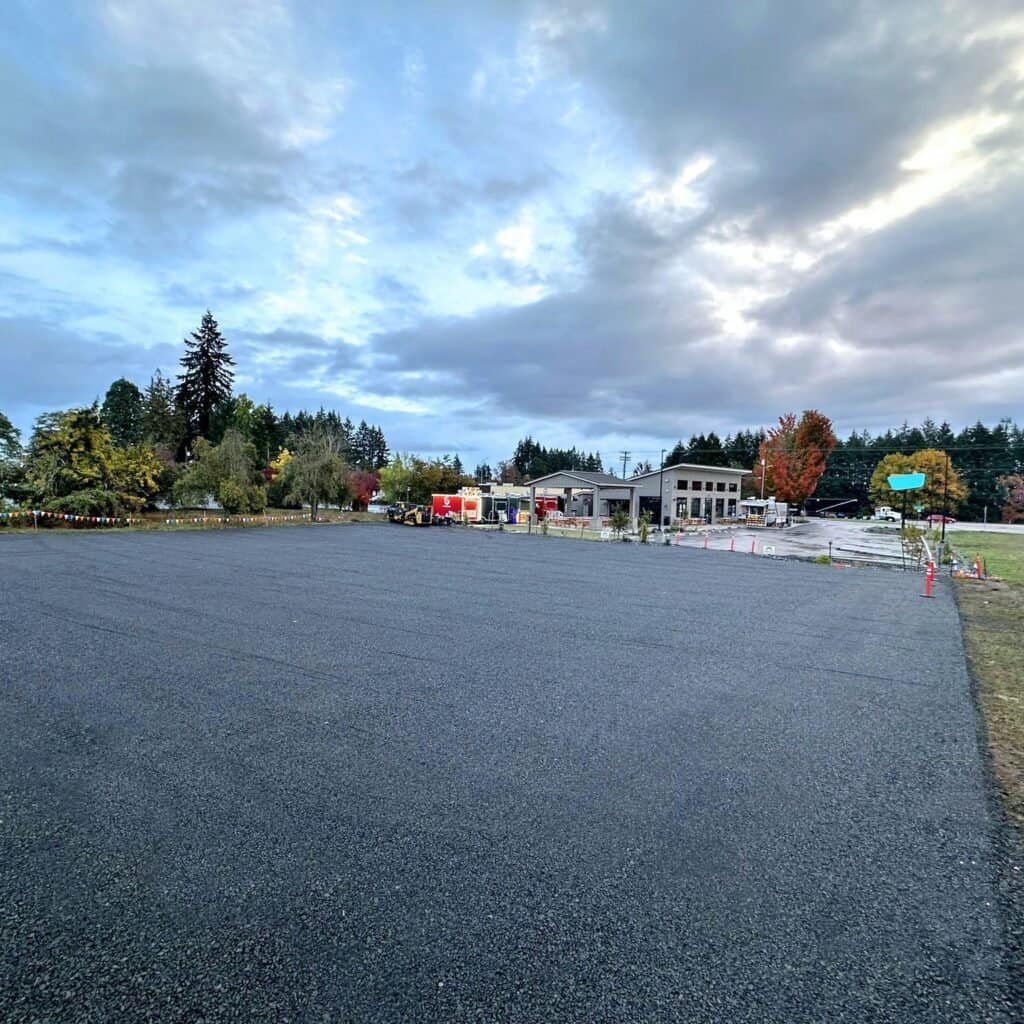
The Lodge Carts now has a large, solid gravel lot for customer parking and ample room for summer vendor events. The holes and the seasonal mud are gone.
 After
 After
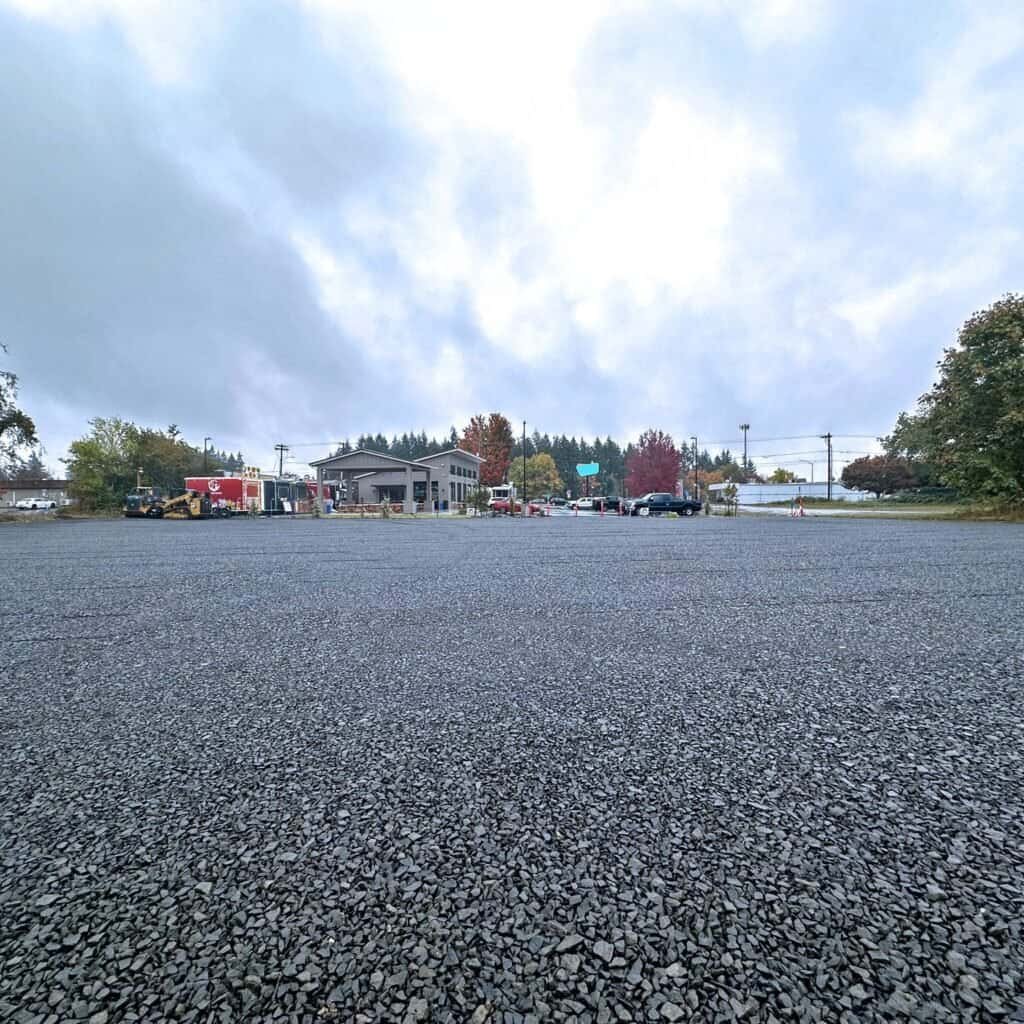 After
The lot has not needed any additional rock or repairs since it was built. If you are passing through Scappoose, stop in for a bite at The Lodge Carts and take advantage of the extra parking.
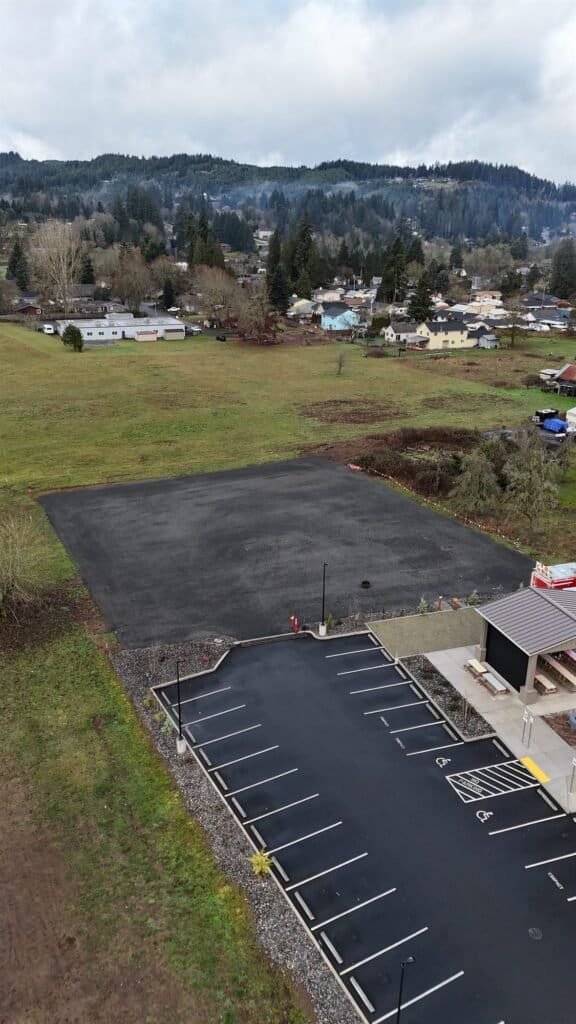
Materials Used
1-1/2" minus base rock and 3/4" minus gravel, about 15 inches total, graded and compacted.
What a Project Like This Costs
Typical range
$25,000 – $50,000
Large gravel parking areas like this one, around 20,000 sq ft or more with a thick, compacted rock base, usually fall in this range.
What affects the cost
Every property is different, so the cost of similar projects can vary. The main factors are:
- Haul distance. The distance between the quarry supplying the material and the job site.
- Material pricing. Rock prices vary by quarry and by material type.
- Project size and depth. The size of the area and the depth of rock required determine the total amount of material.
- Site access. Narrow entrances, slopes or soft ground can require smaller loads or additional trips.
- Site preparation. Stripping topsoil, clearing, grading or drainage work before the rock is placed.
- Ground conditions. Soft or wet subsoil may require a thicker base layer.
Planning a similar project? We're happy to talk through what you have in mind and give you a free estimate.
Common Questions
How thick should gravel be for a parking lot?
It depends on the ground underneath and how much traffic the lot will see. For this lot we installed about 15 inches of compacted rock: a 1-1/2" minus base with a thick layer of 3/4" minus on top. Softer ground usually needs more base rock.
Why strip the topsoil before adding gravel?
Topsoil is soft and full of organic material that breaks down and holds water. Removing it lets the rock sit on firm ground, so the surface does not sink, rut or turn to mud.
Can a gravel lot handle events and heavy use?
Yes, when it is built on a firm base and compacted properly. This lot handles everyday customer parking and summer vendor events and has not needed any repairs.
Planning Something Similar?
See our Scappoose excavation services, gravel pads and Scappoose site preparation, or request an estimate and we'll take a look at your site.
← All success stories