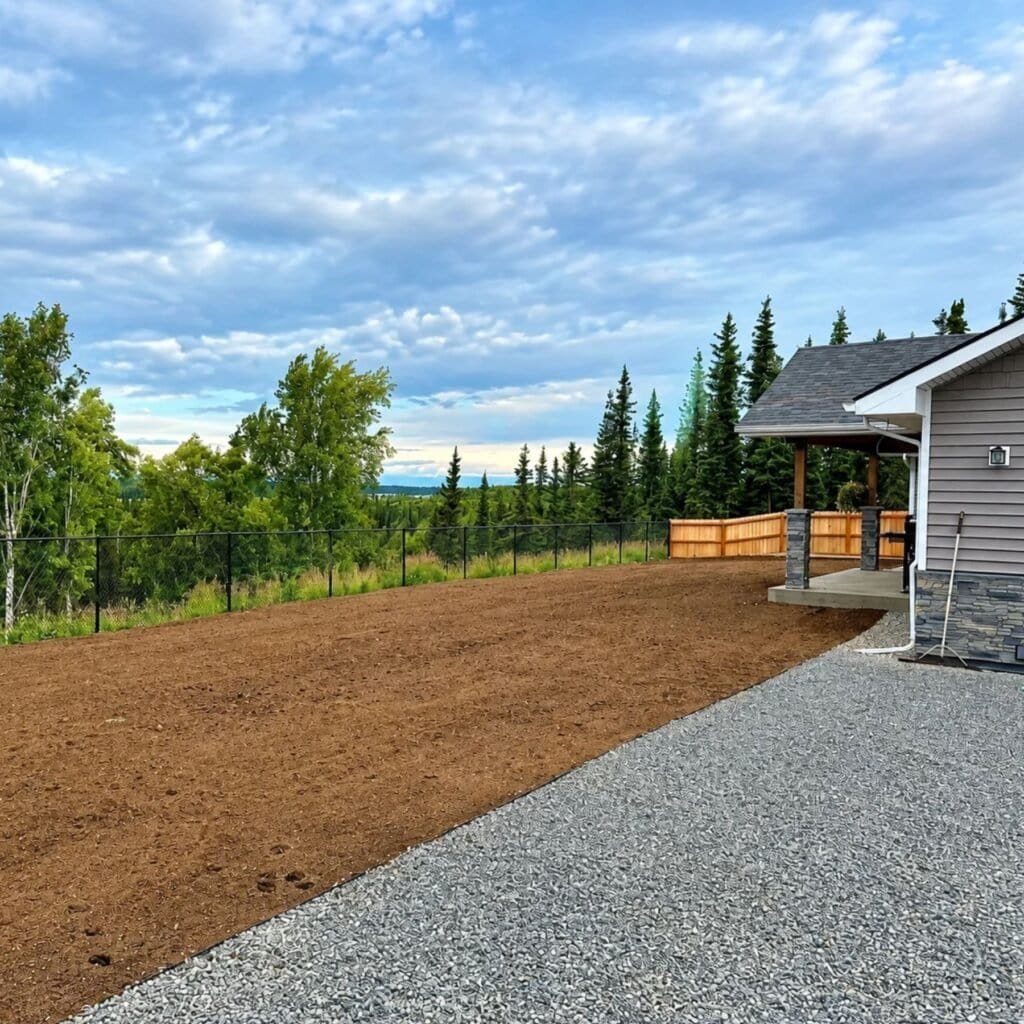

The Problem
These clients had just put up a new horse arena, and they asked us to come in after the building went up to handle the drainage and finish work around it.
The building sits on what's called a cut-and-fill pad. To create a level spot on a sloped site, the contractor cut into the high side of the embankment and used that material to fill the low side.
It's a common way to build a pad, but it has a side effect. With the high side cut away, the whole embankment behind the arena slopes right toward the building. Every time it rains, that water heads straight for the structure.
The downspouts were also emptying right at the base of the walls, and the ground around the arena was rough, uneven and hard to walk on.
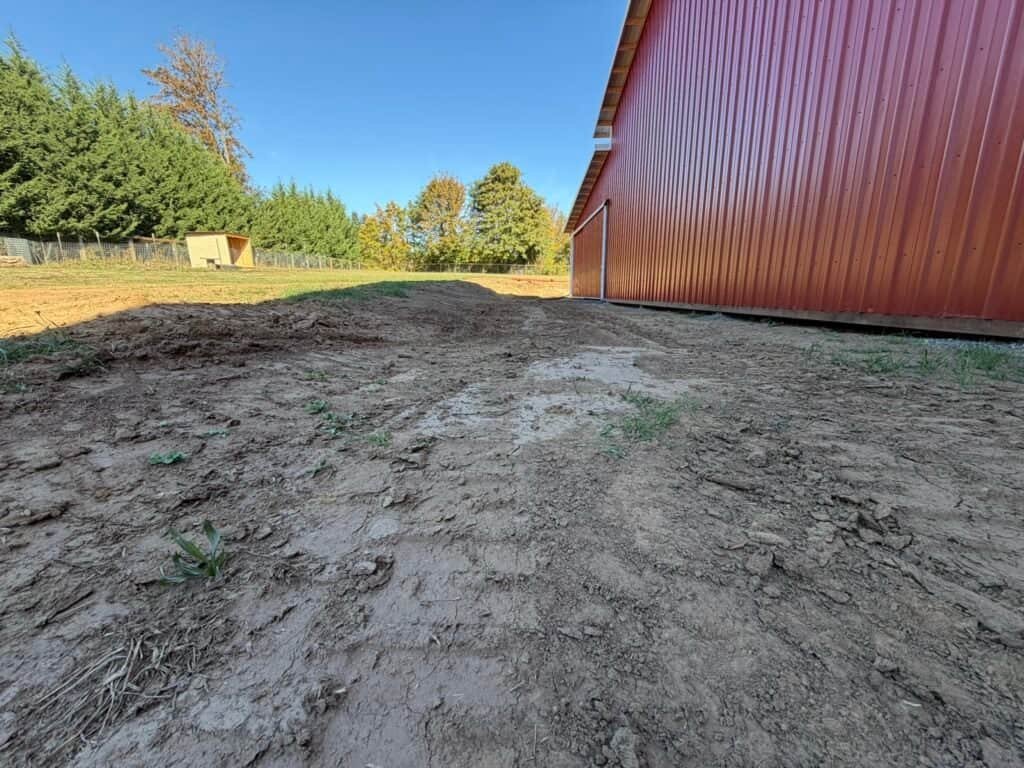 Before
 Before
A Curtain Drain Around the Entire Arena
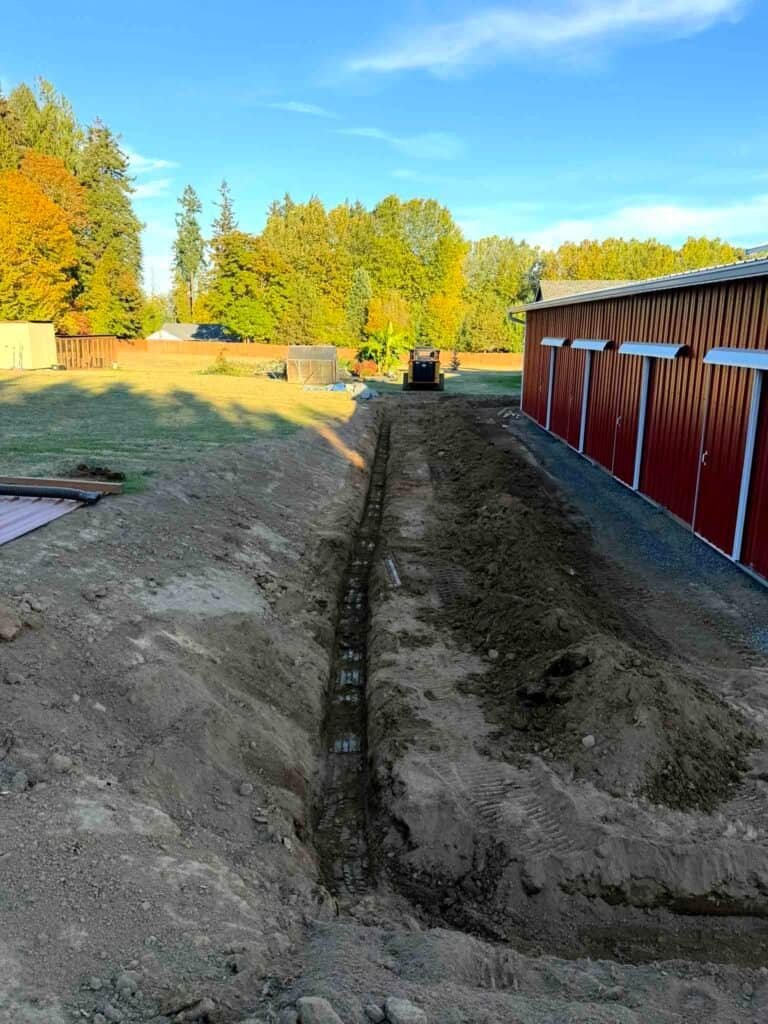
The first priority was getting water away from the building, so we installed a curtain drain around the full perimeter of the arena.
A curtain drain is a type of French drain that intercepts water before it reaches a structure. Water coming down the slope runs into the drain and is carried away, instead of soaking into the ground at the base of the walls.
We used 4" perforated drain pipe and backfilled the trench with 1-1/2" to 3/4" round drain rock.
We also left the drain open, with no soil covering the rock. That makes a real difference. Water can drop straight into the rock and reach the pipe quickly, instead of having to soak through a layer of soil first.
Downspouts on Their Own Line
In the same trench, we ran a separate pipe and tied in all of the downspouts.
A roof sheds a lot of water at once. Keeping it in its own line carries it away from the arena, instead of dumping it into the drain rock right next to the building.
Between the curtain drain and the downspout line, water from the slope and water from the roof now both have a clear path away from the arena.
Tapering a Steep Side Slope
One side of the arena had a very steep slope, too steep to walk comfortably or mow safely.
We brought in additional material and tapered it out into a long, gradual slope. It can now be mowed, and it will be much easier to establish grass on.
Finish Grading and a Rock Pathway
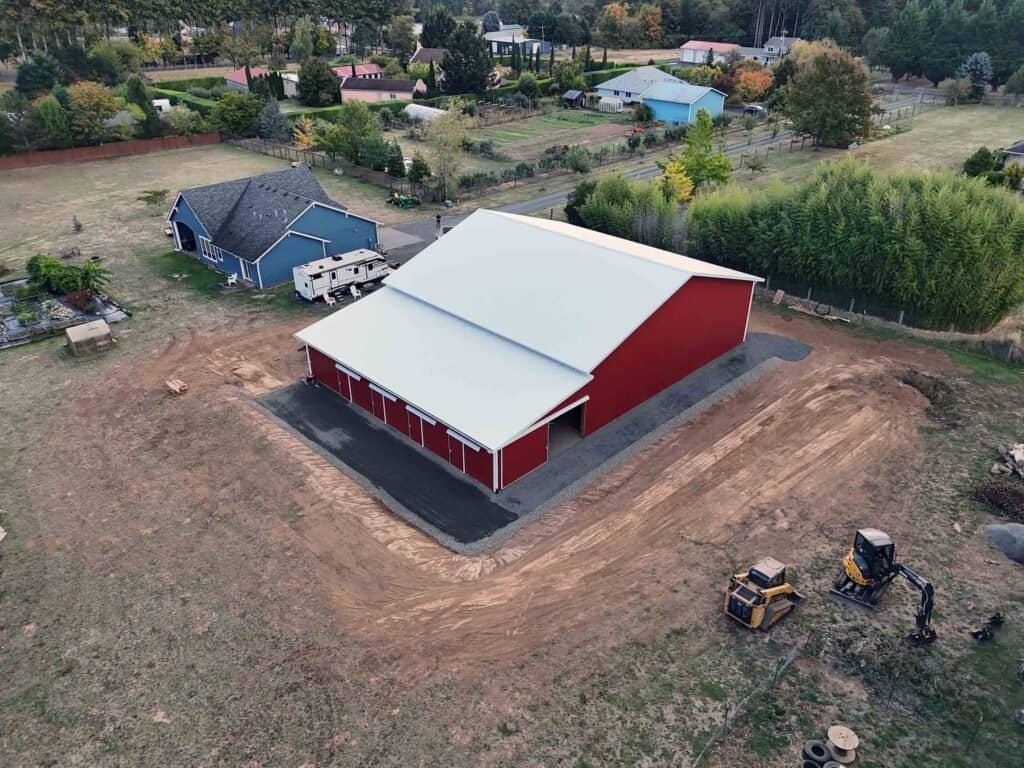
Next, we finish graded all the way around the arena, making sure every surface slopes away from the building.
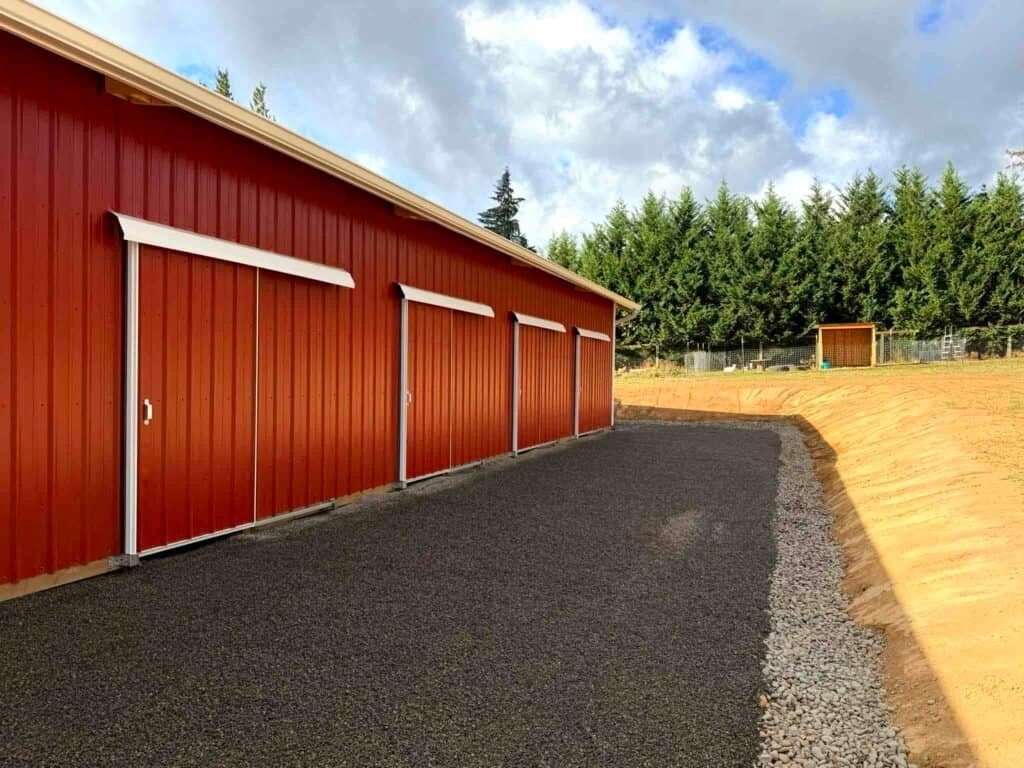
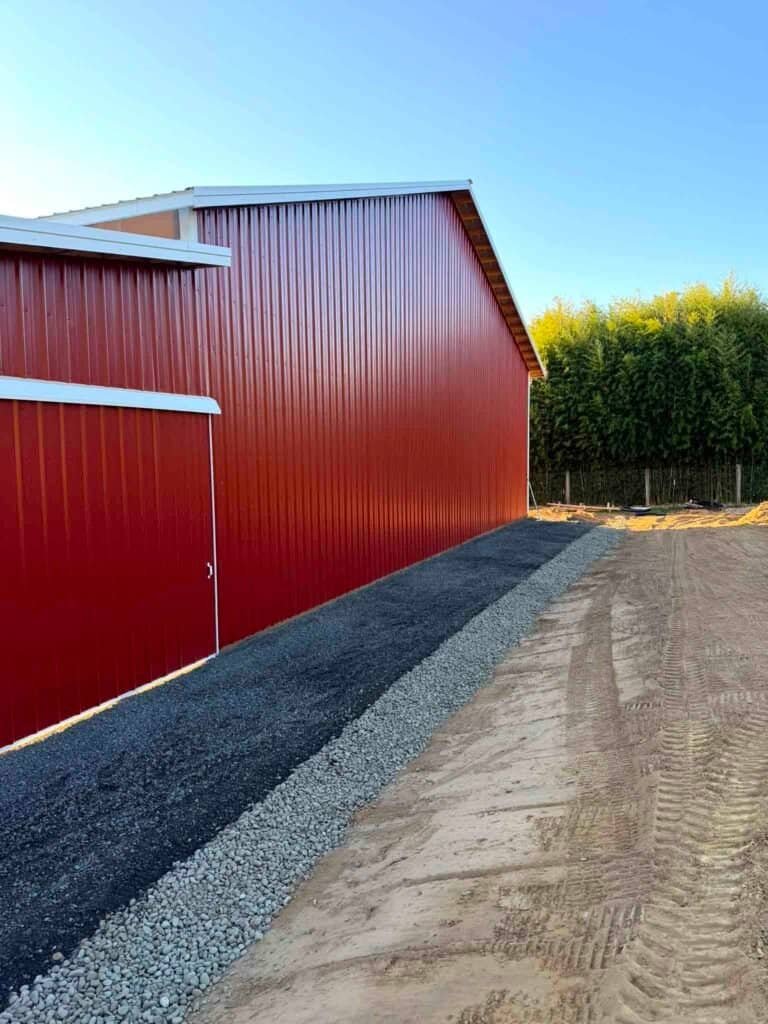
Then we installed a rock pathway around the entire arena, so the clients can walk around the building on firm footing in any season. On the side where the runouts will be, the clients asked for pea gravel, so we installed that there.
We always pay close attention to clean, straight lines. We don't want our work to just function well. We want it to look good too, and we take a lot of pride in that.
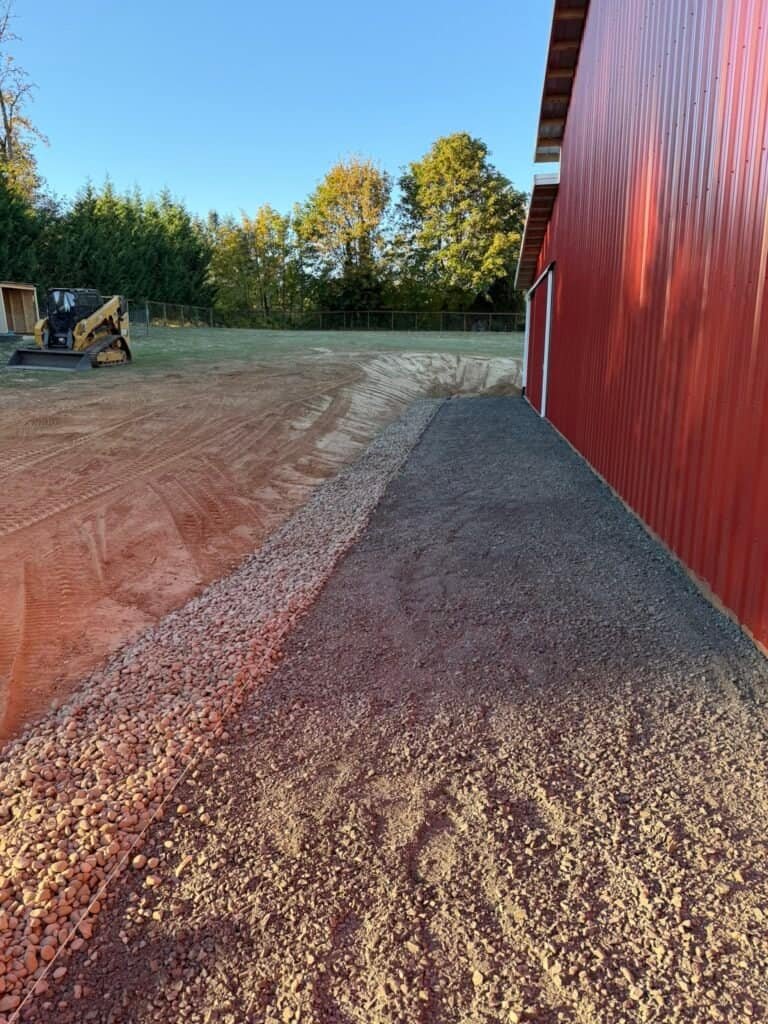
An Easier Approach to the Entrance
The approach up to the front of the building was also very steep. We tapered it in as much as the site allowed and finished it with 3/4" minus, which gives a firm, easy grade going into the entrance.
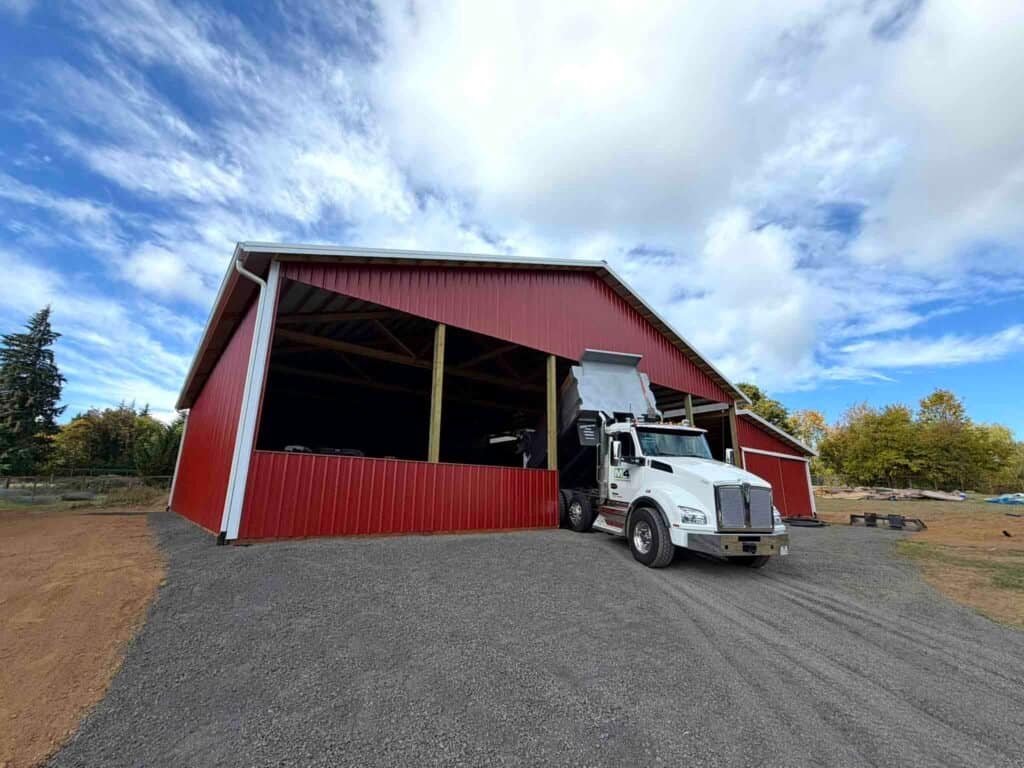
Screened Sand for the Arena Floor
Inside, we installed about 3 inches of screened fill sand across the entire arena floor.

The Result
The difference is huge. Water from the slope and the roof now moves away from the arena instead of toward it, and every side of the building is easy to reach.
The clients can walk all the way around their arena now, and they couldn't be happier. They plan to put down seed and straw on the graded areas once the rain starts.
 After
 After
Materials Used
4" perforated drain pipe and 1-1/2" to 3/4" round drain rock for the curtain drain, a separate pipe for the downspouts, additional fill material for the side slope, rock for the pathway, pea gravel on the runout side, 3/4" minus for the entrance approach and screened fill sand for the arena floor.
What a Project Like This Costs
Typical range
$5,000 – $10,000
Drainage, finish grading and rock work around a new outbuilding like this one usually fall in this range.
What affects the cost
Every property is different, so the cost of similar projects can vary. The main factors are:
- Length of drain. The size of the building sets how much trench, pipe and drain rock it takes.
- Grading and fill. Steep slopes may need extra material brought in to taper them out.
- Material pricing. Drain rock, pathway rock, pea gravel and sand prices vary by quarry and material type.
- Haul distance. The distance between the quarry supplying the material and the job site.
- Site access. Working close to a new building takes more care.
- Ground conditions. Wet or soft ground can add time and material.
Planning a similar project? We're happy to talk through what you have in mind and give you a free estimate.
Common Questions
What is a curtain drain?
A curtain drain is a French drain placed between a slope and a structure. It catches water moving downhill and carries it away before it reaches the building. On this project, it runs around the entire perimeter of the arena.
Why leave the drain rock uncovered?
Leaving the round drain rock open lets surface water drop straight into the drain instead of soaking through a layer of soil first. Water reaches the pipe faster, and the drain keeps working at full capacity.
Should downspouts be tied into a French drain?
It's best to keep them separate. A roof can send a large volume of water all at once. On this project, the downspouts run in their own pipe in the same trench, so roof water is carried away without flooding the drain rock next to the building.
Why do cut-and-fill pads cause drainage problems?
When a pad is cut into a hillside, the bank left on the high side naturally drains toward the building. Without a drain and proper grading, that water collects at the base of the walls.
Planning Something Similar?
See our Warren excavation services, drainage solutions and yard and land grading, read French drain vs. swale vs. dry creek bed, or request an estimate and we'll take a look at your property.
← All success stories