
The Project
Hudson Garbage, based in St. Helens, wanted to expand the dumpster storage area at its yard in Rainier.
The ground where they planned to expand was extremely soft. It looks firm in these photos because it was dry, but in wet weather it lost its strength and turned to deep mud. That kind of ground cannot support loaded roll-off containers or the trucks that move them.
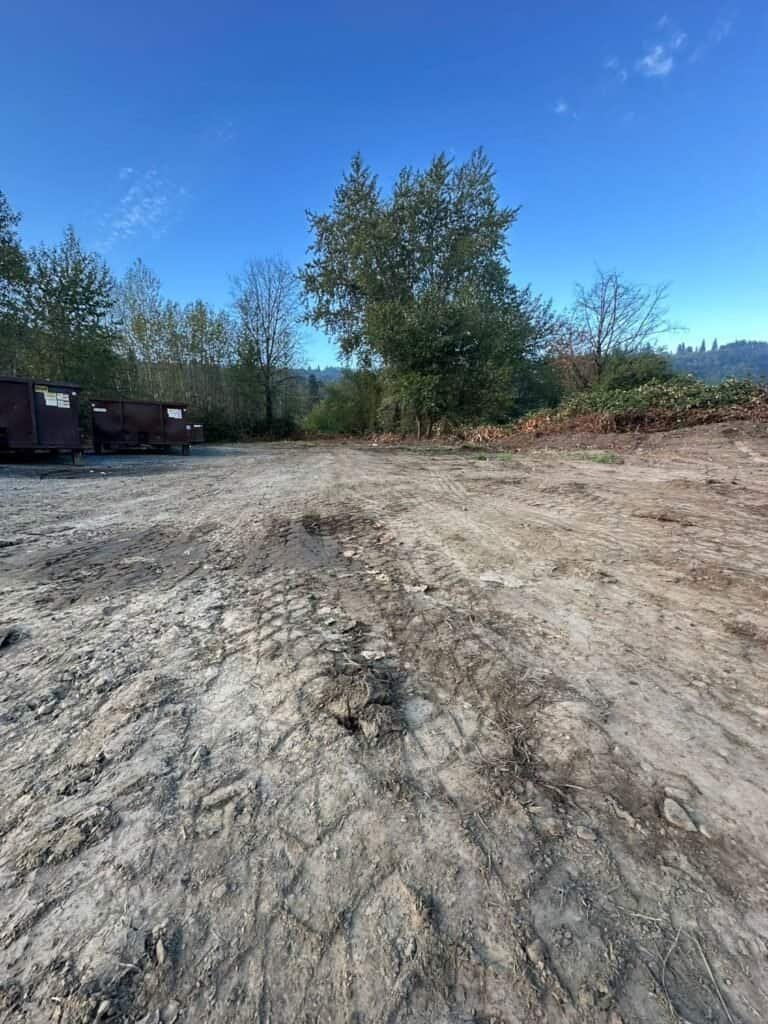 Before
 Before
The Goal
Hudson Garbage needed a solid surface that would hold up to both the dumpsters and the trucks, in every season.
Stripping the Soft Soil
We stripped out as much of the soft soil as we could. Removing that material gives the new rock a firmer foundation, so it does not push down into the mud under heavy loads.
Building Up 1-1/2" Minus
We then installed 1-1/2" minus and compacted it as we built it up, creating a thick, solid layer of rock. The larger crushed rock and its fines lock together into a dense surface designed to carry heavy trucks and stay firm in wet weather.
The Result
Hudson Garbage now has a larger dumpster storage area with a solid surface that supports the containers and trucks year-round and is built to last for years to come.
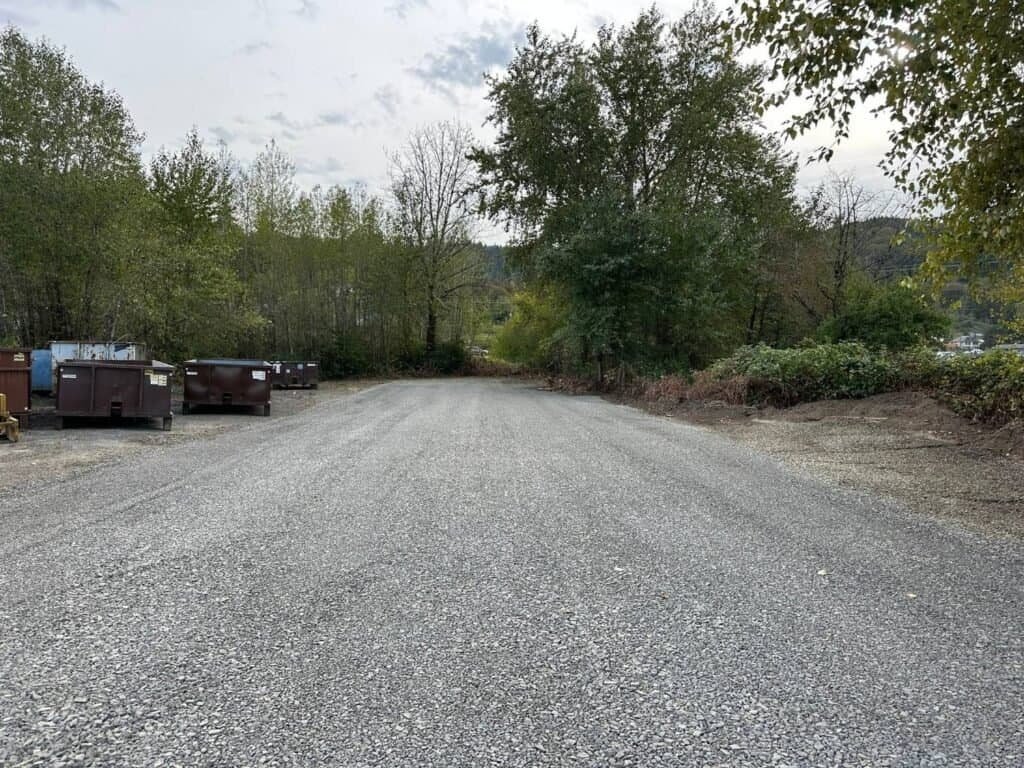 After
Materials Used
1-1/2" minus, installed and compacted after the soft soil was stripped.
What a Project Like This Costs
Typical range
$5,000 – $10,000
Commercial yard expansions like this one, with soft soil stripped and a compacted 1-1/2" minus surface built up, typically fall within this range.
What affects the cost
Every property is different, so the cost of similar projects can vary. The main factors are:
- Area size. The size of the expansion determines the total amount of rock required.
- Soil conditions. How much soft soil needs to be removed, and how deep the rock needs to be.
- Haul distance. The distance between the quarry supplying the rock and the job site.
- Material pricing. Rock prices vary by quarry and by material type.
- Working around operations. Keeping an active yard running during the work.
Planning a similar project? We're happy to talk through what you have in mind and give you a free estimate.
Common Questions
What gravel is best for a commercial yard with heavy trucks?
1-1/2" minus is a strong choice. The larger crushed rock and fines compact into a dense, load-bearing surface that holds up under loaded trucks and heavy equipment.
How do you build on soft, muddy ground?
Strip out as much of the soft soil as possible, then build up compacted layers of larger crushed rock. Removing the soft material first gives the new rock a firmer foundation.
Why does ground that looks firm in summer turn to mud in winter?
Soils with a lot of silt and clay hold water. When they are wet, they lose strength and turn soft under traffic, even if they look solid when dry.
Planning Something Similar?
See our gravel pads, Rainier site preparation and Rainier gravel delivery, along with another commercial project: the gravel lot for The Lodge Carts in Scappoose. You can also request an estimate and we will evaluate your property.
← All success stories